Real estate money floods local races as Election Day nears

Plus, a master plan to reconstruct Gaza’s housing and infrastructure, Cantor Group saga reaches Manhattan and more national real estate news this week

Andrew Cuomo, Zohran Mamdani, Emilio Gonzalez, Eileen Higgins and Joe Carollo
Andrew Cuomo, Zohran Mamdani, Emilio Gonzalez, Eileen Higgins and Joe Carollo (Getty)

Oct 26, 2025, 9:00 AM EDT

By Mike Romano

Save article

With Election Day just over a week away, real estate interests are closely watching mayoral races and ballot measures that could shape local markets for years to come.

From New York to Miami, developers, brokers and landlords are spreading their bets across candidates who promise growth, clarity and, ideally, predictability.

In New York City, what began as a crowded field has narrowed into a three-way fight where housing policy has become a defining issue. Zohran Mamdani, a Democratic Socialist who wants to freeze stabilized rents for four years, has rattled landlords and condo owners. Former Gov. Andrew Cuomo, running as an independent, is calling for tweaks to Local Law 97 and positioning himself as the pragmatist, and the clear favorite of the real estate world.

According to The Real Deal’s analysis, the industry has pumped about $12.4 million into the race, with roughly $11 million flowing through super PACs. Cuomo’s Fix the City PAC has drawn the lion’s share of that support (about $5.2 million) as major donors coalesce around a familiar ally. When Mayor Eric Adams exited the race last month, industry money rushed back to Cuomo, to the tune of $41,000 in just two days.

Still, Mamdani isn’t completely iced out. Affordable and nonprofit developers have quietly contributed, signaling they’re willing to work with him if he wins. Republican nominee Curtis Sliwa has pitched office-to-residential conversions as his main affordability plan, but with limited traction in the polls, most of the industry’s focus remains on the Cuomo–Mamdani showdown.

In Miami, the mayor’s race is a full-blown free-for-all, with 13 candidates vying to replace Francis Suarez. Top contenders, including Joe Carollo, Alex Diaz de la Portilla, Eileen Higgins and Xavier Suarez, are all drawing checks from the city’s development elite. Firms like Terra, Related Group and 13th Floor Investments are hedging their bets, donating to multiple campaigns at once. With Miami’s market under strain from high costs and political dysfunction, the city’s biggest players are seeking stability more than ideology.

In New Jersey, the race to replace Gov. Phil Murphy has the industry leaning red. Republican Jack Ciattarelli has raised about $1.3 million in real estate donations, which more than doubled Democrat Mikie Sherrill’s haul. The Adjmi, Chera and Cayre families are among Ciattarelli’s top backers, while the Dursts and Tisches are standing behind Sherrill. Real estate issues have been central in the election, as New Jersey is one of the most expensive states for housing and the most densely populated state in the country. 

There aren’t any major mayoral races in Texas this cycle, but voters will weigh in on several real estate-related ballot measures. The biggest is Project Marvel, a $4 billion mixed-use development anchored by a new Spurs arena in San Antonio. Two local propositions would direct hotel and venue taxes toward the project, though polling shows mixed support and Mayor Gina Ortiz has questioned the team’s contribution. Statewide, measures include property tax relief for homeowners and seniors, a ban on any future inheritance tax and a proposal to protect “Y’all Street” by prohibiting taxes on financial transactions.

Out west, the 2026 California governor’s race is already a quiet proving ground for real estate influence. Former L.A. Mayor Antonio Villaraigosa leads the fundraising pack, drawing support from Related California’s Bill Witte, developer Joseph Moinian and broker Kurt Rappaport, many of whom applaud his skepticism of L.A.’s property transfer tax, Measure ULA.


There was plenty of other real estate news this week. Jared Kushner and Steve Witkoff pitched a $50B Gaza reconstruction, a Chicago investor turned on a longtime ally and a California firm related to Zions Bancorp’s stock tumble has ties to NYC real estate.
Demolition Nears Completion for 538-Foot Skyscraper at 5 West 13th Street in Greenwich Village, Manhattan

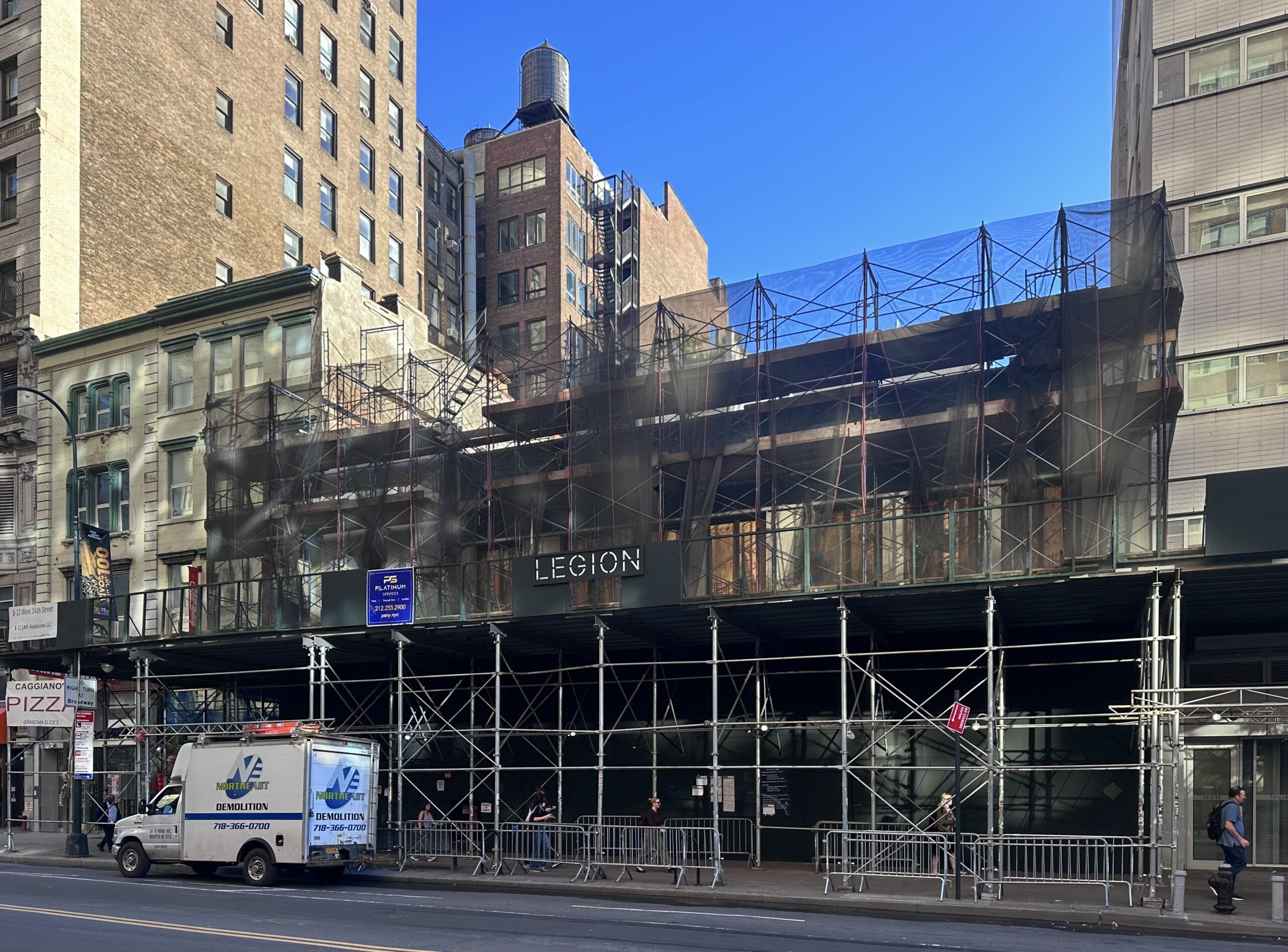
5 West 13th Street. Photo by Michael Young.5 West 13th Street. Photo by Michael Young.

By: Michael Yound and Matt Pruznick 8:00 am on October 16, 2025

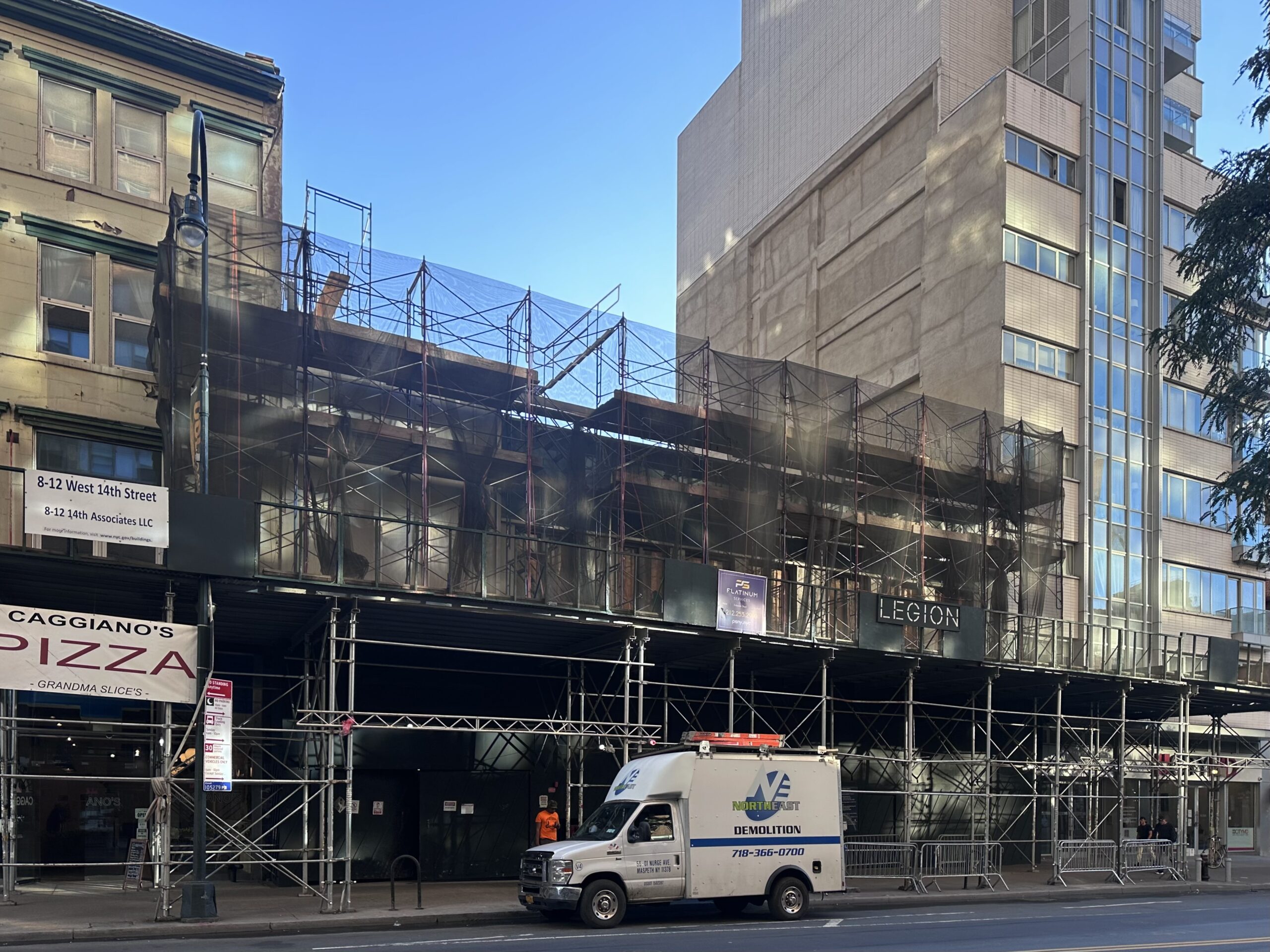
Demolition is finishing up at 5 West 13th Street, the site of a 30-story residential skyscraper in Greenwich Village, Manhattan. Designed by Kohn Pedersen Fox and developed by Legion Investment Group and EJS Group, the 538-foot-tall structure will span 111,022 square feet and yield 36 condominium units with an average scope of 3,020 square feet. The project will also include 2,300 square feet of ground-floor retail space with two storefronts. The through-lot property is alternately addressed as 8–12 West 14th Street and located between West 13th and West 14th Streets near Fifth Avenue and Union Square.

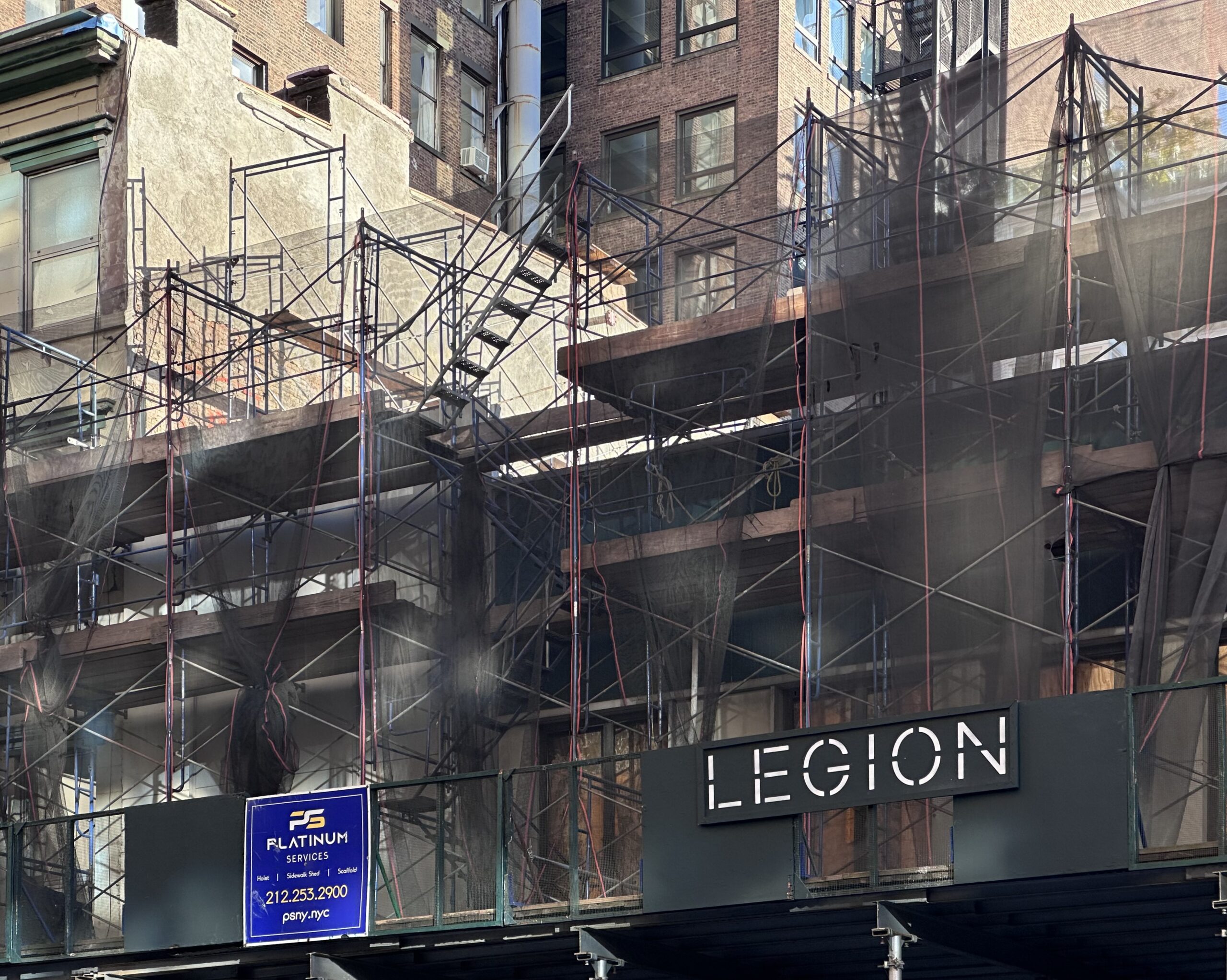
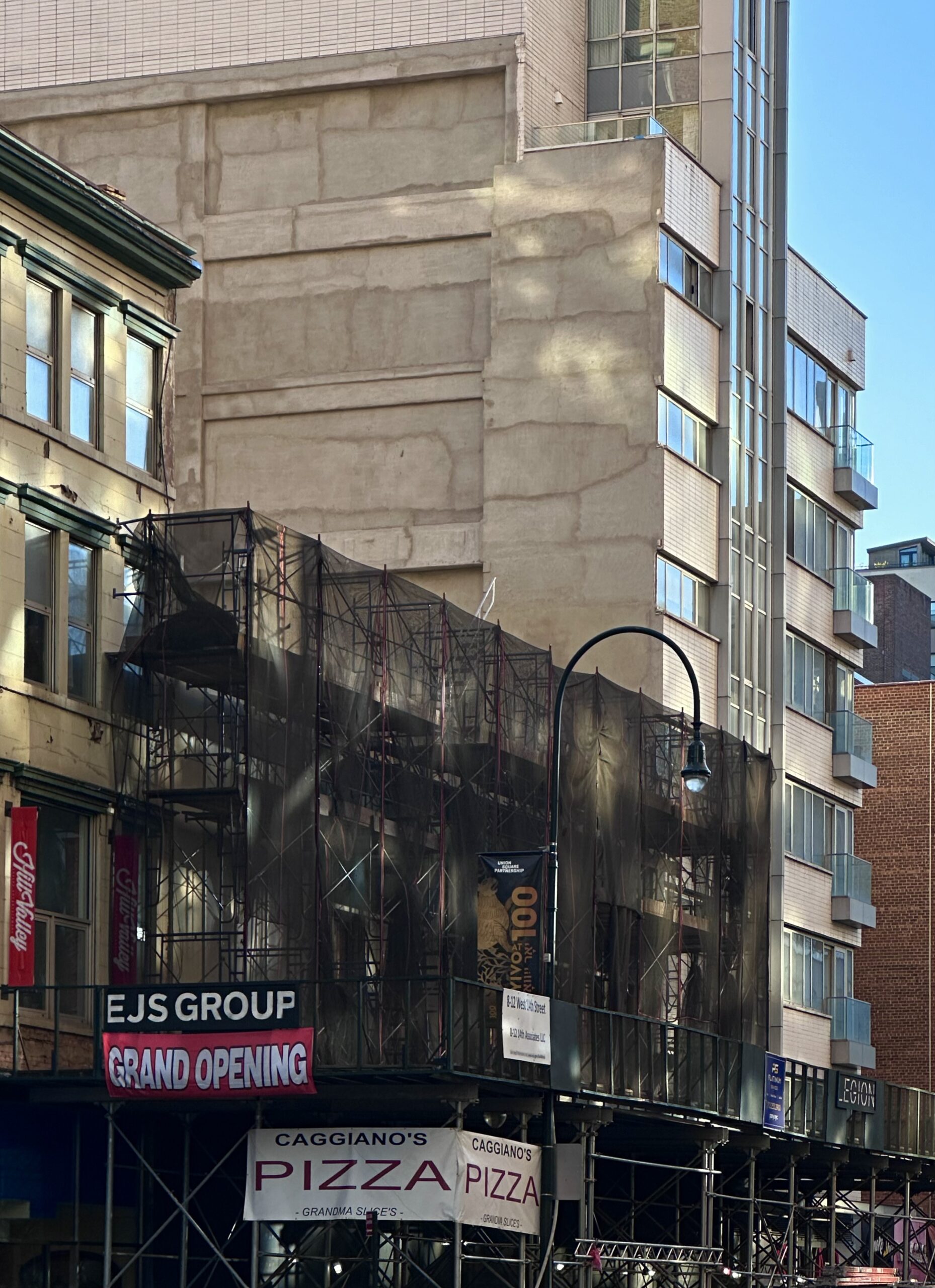
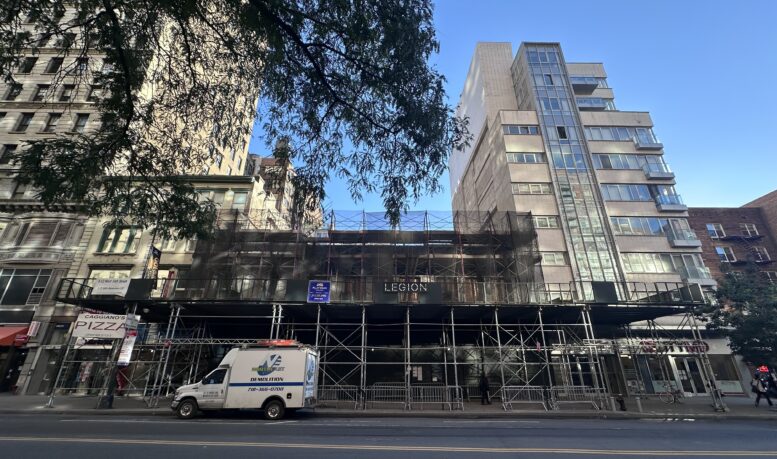
Most of the former six-story occupant of the site was razed since our last update in late April, when demolition preparations were just getting underway. Black netting and scaffolding shroud the remaining two stories of the midcentury structure, which should likely complete demolition before the end of the year.

5 West 13th Street. Photo by Michael Young.

5 West 13th Street. Photo by Michael Young.

5 West 13th Street. Photo by Michael Young.

5 West 13th Street. Photo by Michael Young.

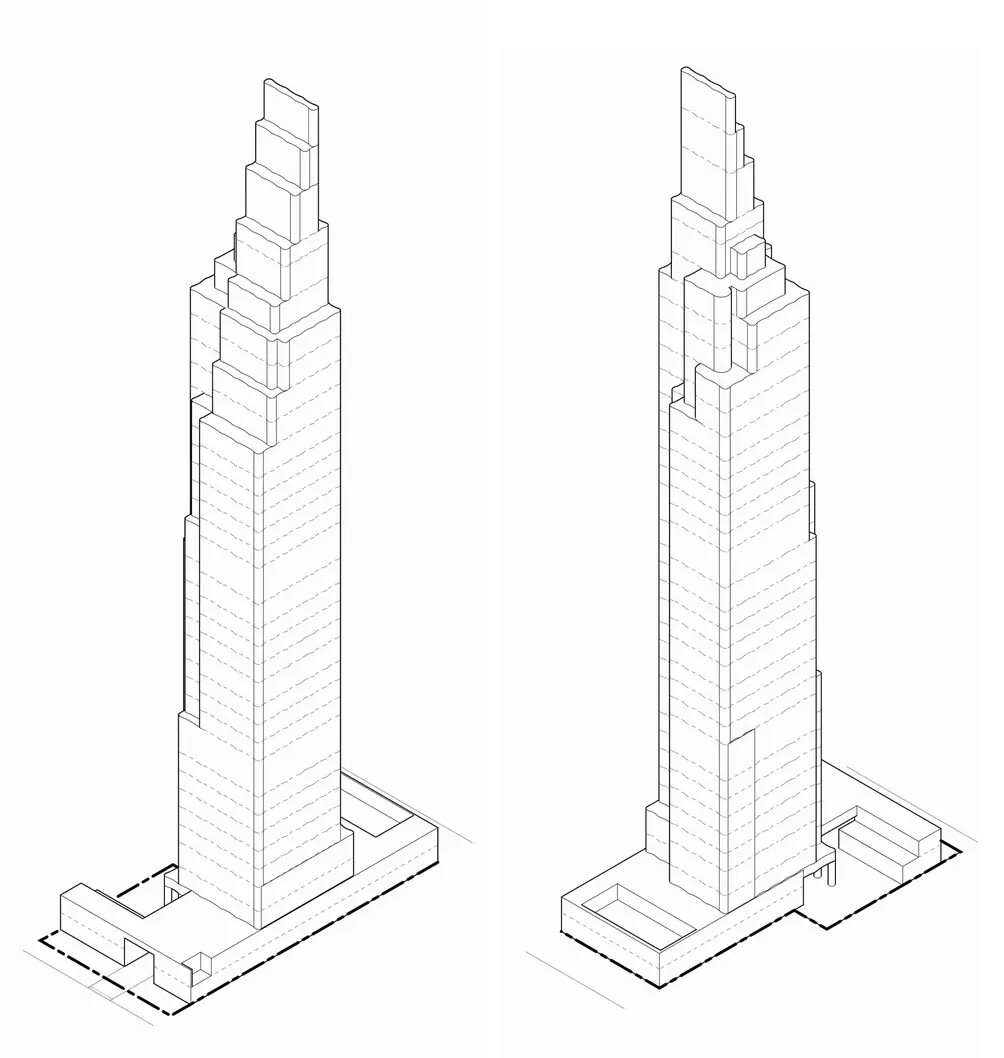
No renderings have been released for the project with the exception of the below axonometric diagrams first revealed on CityRealty in early August. The left diagram shows the southern profile facing West 13th Street, while the right shows the northern elevation along West 14th Street. The building begins with a two-story podium spanning the entire parcel, with a porte-cochère entrance along West 13th Street leading to a motor courtyard. A rectangular cutout is present on the opposite northern side of the podium roof, likely indicating the presence of a swimming pool.

The tower rises from the center of the lot with a fairly slender massing incorporating cutouts at the northeast and southwest corners. A handful of shallow setbacks are located within the corner cuts. A series of cascading setbacks begins at the 26th story, creating ample space for private terraces on the upper stories, and the building culminates in a tiered crown that steps upward to the south. Several double-height levels are indicated throughout the height of the skyscraper and will likely house mechanicals.

Possible façade materials remain unclear at the moment, but the diagrams do depict the exterior with an undulating geometry.

5 West 13th Street. Designed by Kohn Pedersen Fox.

Residential amenities will include a gym, swimming pool, golf simulator, pet grooming room, library and lounge, seven enclosed parking spaces, and bicycle storage.

The development site is located in close proximity to Union Square, providing convenient access to the 4, 5, 6, N, Q, R W, and L trains. Also nearby to the west are the F, M, and L trains at the 14th Street station along Sixth Avenue.

A construction timeline for 5 West 13th Street has yet to be announced.

New York new development has a looming inventory crisis

Condo market faces a reckoning as the development pipeline has dried up

Sep 29, 2025, 10:09 AM EDT

By 

  • Jade Indursky

Listen to this article

New York City’s new development market is facing a reckoning in 2026. 

It’s not that demand has ground to a halt. A number of new buildings launched in the last year have sold quickly and with few discounts. 

But the new buildings for buyers to tour in the back half of the year have all but disappeared in the proverbial fog of high financing costs and scarce assemblage opportunities, a trend that will only continue into next year, according to data shared from new development teams and analysts in the city. 

In the second quarter of this year, the 3,600 unsold units in Manhattan marked a 10-year low, according to data from Corcoran Sunshine Marketing Group, and that number will only shrink heading into next year. 

This year, only five more buildings are projected to deliver 245 units in Manhattan, according to data from Brown Harris Stevens Development Marketing.  

“It’s surprising to me that it’s taken so long for so many people to actually catch on, because this has been in the making for quite some time,” said Corcoran Sunshine Marketing Group president Kelly Mack.

Caught between cycles

“In terms of actual inventory delivery to the market, you’re seeing a lull,” said Reuveni Development Marketing’s Daniel Pupke. “We’re in between two eras of cycles.” 

The first was the post-pandemic boom that brought one of the best markets the city had seen in years. Buyers rushed into available buildings, while developers scooped up parcels with cheap financing. 

“People bought and mobilized very quickly,” Pupke said, pointing out that many of those projects had seen success since coming to market in the last 18 months. 

Take Avdoo’s 105-unit Boerum Hill project, Bergen. The firm acquired the site for $44 million at the end of 2021, and six months later had filed permits for the condo project. The project launched sales in the spring of last year and has been one of the best-selling condos in the city, with over 70 of its units sold. 

But when interest rates rose heading into 2023, the first step of the development cycle was “essentially on pause unless you had a contract and financing,” Pupke said. 

“The biggest factor in why we have less new projects today on the market is available equity,” said BHSDM managing director Robin Schneiderman. “That, to me, is what sort of drives the market overall.”

The equity dry spell went hand-in-hand with an increase in land prices, making ground-up developments more difficult to pencil, and the 2019 Housing Stability and Tenant Protection Act, which made it more difficult to convert rental buildings to condominiums. 

From the midpoint of 2025 to the end of the year, only 1,450 units are expected to be delivered to the market, for a 29 percent decrease from its historic average. New development sales outpaced launches by 60 percent this year, according to Corcoran Sunshine.

Bright spots

Amid the downturn, the Upper East Side stands out. The neighborhood is expected to bring more units to the market through the end of 2026 than has historically been the case. 

The largest launch there will be Related Companies’ 144-unit rental-to-condo conversion, The Strathmore, at 400 East 84th Street, which Corcoran Sunshine Marketing Group will be selling.  

The project, which will have some units offered at under $1,800 per square foot, is also filling a gap in what Mack referred to as entry-level inventory. 

“With new projects harder and more expensive to build and finance, most new projects are coming in at higher price points than we’ve historically seen,” she said, making the under $1,800 per square foot offerings “increasingly rare.” The average annual delivery of units in that price range will fall by over 60 percent through the end of 2026, according to data from Corcoran Sunshine. 

Across the park, the Upper West Side is bereft of development opportunities, on track to exhaust its new development inventory as soon as 2027, according to Mack, with only 30 units expected to be released in the neighborhood through the end of 2026.

The only other development over 100 units with a planned sales launch this year is Rotem Rosen’s development at 126 East 57th Street on Billionaires’ Row, dubbed the Malabar Residences. The project, which is being sold by Douglas Elliman Development Marketing, recently lost its sales director when Noble Black departed for Corcoran last week

“There’s some very high price profile, sort of exciting new developments are going to enter the market, but they’re going to be in the luxury category and the super luxury category,” Mack said. 

One noteworthy market entrant will be the Brodsky Organization and Sorgente Group’s 38-unit conversion project at the Flatiron Building, where some onlookers have said prices could reach as high as $6,000 per square foot

Grid Group’s boutique 22-unit Chelsea project at 142 West 21st Street will also launch sales this year, offering 16 parking spaces. 

The two developments fit the mold of what’s coming to the market downtown, where buyer demand remains relentless: boutique, private and expensive. Projects like 140 Jane Street and The Katharine, which quickly sold seven of its 8 units after launching sales this spring, have laid out a playbook for developers that can find assemblages below 34th Street. 

Larger projects expected to come to market next year include Elad Group’s condo conversion at 419 Park Avenue South and Continuum Company’s 137-unit development at 26 East 35th Street, according to data shared by Corcoran Sunshine. 

Brooklyn is facing many of the same issues, albeit at a smaller scale. The nearly 1,000 units in the pipeline for next year are well above the yearly historical average of 535, according to data from BHSDM, but the average condo size is just 17 units, as many of the borough’s projects center on brownstone conversions or smaller ground-up developments. 

Sales are expected to launch in the first quarter of next year at Charney Companies’ 182-unit project at 95 Rockwell Place in Fort Greene, according to a spokesperson for the project. Urban Development Partners will also be launching sales at a 71-unit project at 285 Schermerhorn Street this year in Downtown Brooklyn. 

Looking ahead

The good news for developers is that any project coming online in the next several years will face limited competition. 

“If you today presented a B+ or better site with views, you could be extremely successful if you deliver in three to five years,” Pupke said. 

He added that the activity around projects has shifted and developers are buying again. 

“You wouldn’t see action following the conversations that were happening,” he said of developers eying opportunities the last few years. “Speaking to the same groups, you’ll read three months later that the site closed.” 

The paucity of sales launches is good news for projects with significant inventory still to move, like One Wall Street or The Greenwich, two condos in the Financial District with hundreds of units still to sell. In the last 12 months, The Greenwich has been the third-fastest-selling building in the city, according to Marketproof. 

Still, new condos don’t pop up overnight, and Mack doesn’t see a quick fix on the horizon. 

“It’s going to take at least five years to turn that picture around,” she said.