From ashes to assets: Who’s snapping up California’s fire-damaged land?

A snapshot of the Powerball winner, toymakers and other big spenders making bets on the fire recovery

Zuru Group's Nick Mowbray and New Pointe Communities Inc.'s Scot Sandstrom with burned lots in Altadena (Getty, Facebook/New Pointe Communities, Inc., The Real Deal)
Zuru Group’s Nick Mowbray and New Pointe Communities Inc.’s Scot Sandstrom with burned lots in Altadena (Getty, Facebook/New Pointe Communities, Inc., The Real Deal)

Aug 28, 2025, 9:00 AM EDT

By Kari Hamanaka

Listen to this article

08:54

1x

Key Points

The buyer pool of burned lots in Southern California’s rebuild is rapidly growing.

Last week saw a diverse group of investors, including traditional developers, toymakers and even a California Lottery winner.

What’s at stake is laying claim to part of a historic, multi-community rebuild.

So far, over $84 million has been pumped into Altadena, Malibu and the Palisades by investors, based on a comb through property and state records.

Unlike Altadena and Malibu, the Palisades has yet to see a similar level of multi-lot purchasing. Palisades veteran Anthony Marguleas of Amalfi Estates last reported that multi-lot sales from syndicates are so far rare, with only one entity nabbing three lots, according to the broker’s July market report.

Additional numbers may help make that picture clearer, with Marguleas finding Altadena lots are trading 2 percent over their asking price in contrast with 9 percent below list in the Palisades. 

Additionally, Altadena lots of 9,965 square feet have been selling for $643,423 on average. Meanwhile, an 8,255-square-foot lot in the Palisades averages $2.3 million, Marguleas reported.

What follows is a look at some of the larger players that have made moves in the market.

Mowbray Brothers/Zuru Tech

Total deals/volume: 9/$65 million

Where: Malibu

From a dollar standpoint, New Zealand serial entrepreneurs Nick and Mat Mowbray have so far invested the most in land.  

It’s not easy to figure out why. The brothers, who made their fortune off toys and then consumer products, have focused on oceanfront parcels dotting Pacific Coast Highway.  

The buys range from $5 million, which was five out of the nine deals, up to $13.8 million for a nearly 15,000-square-foot lot at 21348 Pacific Coast Highway on La Costa Beach.

The deals were done through various limited liability companies, all of which trace back to Zuru Tech US, the El Segundo-based division of Zuru Group.

In an interview with The Real Deal, their real estate agents, who declined to disclose the identity of their clients, said a team was being built to help expedite the process for when they’re ready to begin building. The identity of the Mowbrays was first revealed in a video by Kevin Shelburn, founder of Mar Vista-based Shelburn Realty Group.

Adding to the intrigue is the Zuru Tech US business. While the brothers made their fortune off toys like Mini Brands and Bunch O Balloons, they see an even bigger business in high-tech development via prefabricated housing. Nick Mowbray told Bloomberg last year, “what we’re doing with this housing project is going to dwarf everything we’ve ever done.”

Black Lion Properties

Total deals/volume: 9/$6.3 million

Where: Altadena

What’s more interesting than two brothers, who built an over billion-dollar toy business, pushing their way into Malibu real estate? Some might say an Altadena Powerball winner turned real estate investor.

Black Lion Properties, which is reportedly tied to Edwin Castro, is behind multiple lot sales in Altadena since January’s Eaton Fire.

Castro had the winning ticket in the November 2022 California Lottery’s Powerball drawing, with a $2.04 billion jackpot.

Reports began to surface in recent months that Black Lion intended to invest in Castro’s hometown of Altadena in a bid to rebuild for those who don’t have the means to do so and to keep ownership local.

“Many people who were affected by the fires in Altadena cannot or do not want to rebuild and aspire to move on and start elsewhere,” the two brothers said in a joint statement published in a Lottery website. “These purchases will help some of them, while keeping ownership of the property local.”

A state filing shows Black Lion Properties is tied to a Pasadena address managed by Jesse H. Castro, who is reportedly the brother of Edwin.

The company was formed in August 2024 as a vehicle for real estate investments and began making moves in mid-December, according to property and state records. That’s when Black Lion purchased homes in Alhambra and South Pasadena.

Sign Up for the National Weekly Newsletter

SIGN UP

The purchases ramped post-fires, in March, when Black Lion scooped up its first two Altadena lots and now has nine buys so far in the community under its belt, based on records found in PropertyShark.

New Pointe Communities Inc.

Total deals/volume: 8/$5 million

Where: Altadena

San Diego building and development firm New Pointe Communities Inc. is already in the process of rebuilding, listing eight properties on its website that are currently under construction in Altadena.

New Pointe made its buys through a limited liability company, according to property and state records.

The company’s currently showing on its website a four-bed, three-and-a-half-bath Altadena floorplan that’s about 2,300 square feet.

Altadena wouldn’t be the first time New Pointe, which was founded by president Scot Sandstrom, has gone into a fire-damaged area and been a part of the rebuilding. The company acquired lots to redevelop after 2007’s Witch Creek Fire in San Diego County.

Bloom Capital Investments

Total deals/volume: 5/$3.9 million

Where: Altadena

Records show Bloom Capital Investments made five on-market purchases, ranging from 9,757 square feet to 15,892 square feet.

State records show the limited liability company is managed by Arman Narinyan, who is tied to a Glendale office on Glenoaks Boulevard. Narinyan appears to have his hands in a number of other entities registered in Glendale and Burbank that reflect a mix of business types, including a bakery.

Ocean Development

Total deals/volume: 3/$1.8 million

Where: Altadena

Ocean Development Inc. has made three plays in Altadena since the fires, according to records of on-market deals. There were two deals in March and another in April.

Ocean Development, like New Pointe Communities, is one of the more experienced in real estate among the lot buyers.

It’s helmed by founder and sole owner Amy Cyprus and says it’s built more than 2,000 units in South Los Angeles, with a focus on affordable housing. A sister company, called Ocean Properties Inc., handles property management of a portfolio that consists of four- and five-bedroom duplexes.

Total deals/volume: 3/$1.8M

Iron Rings Altadena

Where: Altadena

Iron Rings’ has picked up a few lots in Altadena ranging from 6,479 square feet to 11,729 square feet, paying anywhere from $550,000 to $675,000 for its investments.

It’s managed by Jack Rose and Quynh Palomino of Alpharetta, Georgia, according to state records and declared its business a “jewelry shop” on its state filing. 

That hardly matches with the other business Rose and Palomino are tied to in Virtua Capital Management. The Arizona company is registered as an investment advisor, which was charged in 2022 by the Securities and Exchange Commission for not disclosing conflicts of interest.

The SEC said some of the company’s funds profited by pumping fund investments into real estate managed by other entities it oversaw without informing its investors, according to the SEC’s cease-and-desist order.

In addition to individual penalties, Virtua paid $1.7 million, which went into a pot that was shared among investors. The company and its executives did not admit or deny the SEC’s assertions.

Read more

Proposed Supertall Designs Revealed for 655 Madison Avenue on Manhattan’s Upper East Side

655 Madison Avenue. Developed by Extell.655 Madison Avenue. Developed by Extell.

By:  Michael Yound and Matt Pruznick 8:00 am on July 11, 2025

New zoning diagrams reveal two potential supertall designs for 655 Madison Avenue, a proposed 74-story mixed-use skyscraper on Manhattan’s Upper East Side. Developed by Extell and designed by Beyer Blinder Belle, the 1,162-foot-tall structure is planned to span 764,698 square feet and yield an undisclosed number of condominium units along with lower-level office and retail space. Extell is currently seeking approval from the City Planning Commission (CPC) for the project, which would rise from the corner of Madison Avenue and East 60th Street.

Demolition began this spring on the existing occupant of the property and could potentially conclude by early 2026.

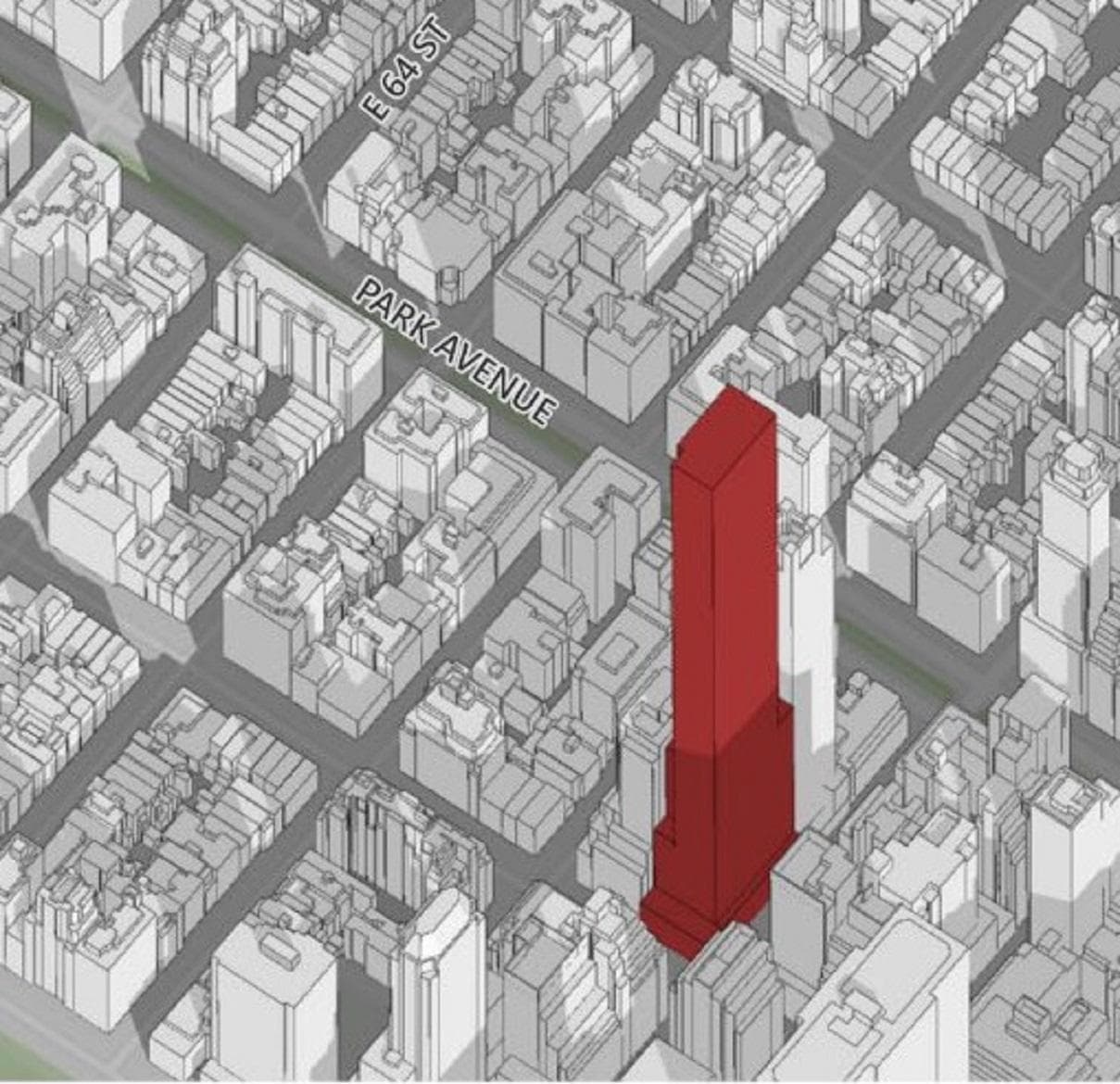
The first design, pictured above, showcases the with-action massing that is contingent on CPC approval of requested zoning changes. The plan would produce a largely monolithic rectangular structure with three setbacks, including one at the 408-foot mark on the eastern elevation. This setback would create an air gap between the project and the abutting 781-foot-tall 520 Park Avenue residential skyscraper from Robert A. M. Stern Architects. The bulk of the building is shown devoted to residential use, with 13 office floors on the lower levels of the tower and four floors of retail in the podium. Separate entrances for the residential and office components are shown located along East 60th Street.

If the CPC does not grant Extell’s proposed zoning amendments, the developer could construct the below design as-of-right. This alternative would directly abut the entirety of 520 Park Avenue’s western elevation but feature a more multifaceted massing on its northern, southern, and western faces. Most prominently, the design would result in a slimmer tower profile on the uppermost levels and would rise 117 feet higher than the with-action proposal, reaching a pinnacle of 1,279 feet. This scheme would devote 17 floors to office use on the lower stories, which would also incorporate numerous setbacks.

Regardless of the outcome, residents of 520 Park Avenue would suffer minimal long-term impact from the adjacency of 655 Madison Avenue, as the skyscraper’s western face is largely devoted to the structure’s core and covered in faux windows.

655 Madison Avenue. Developed by Extell.
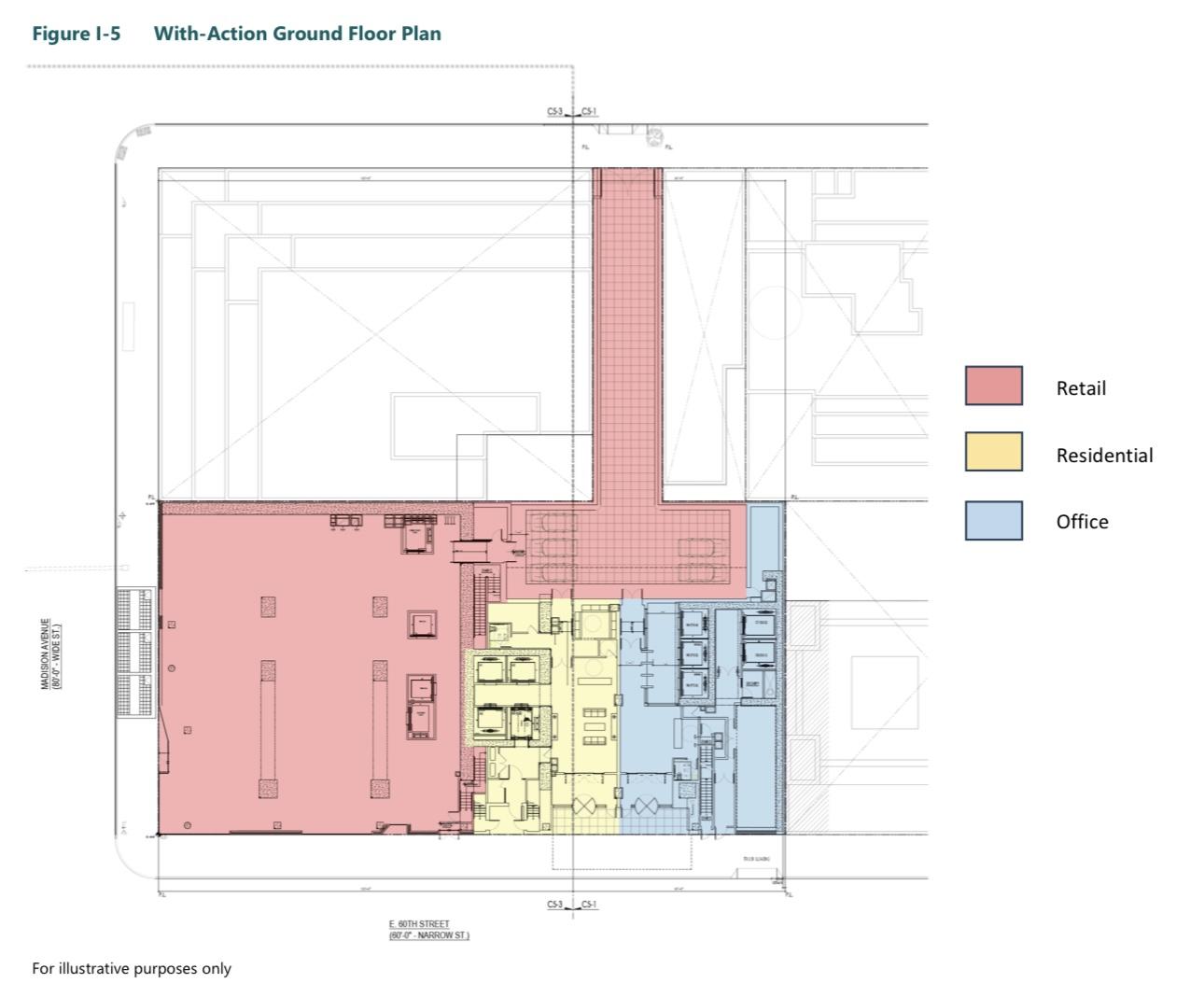
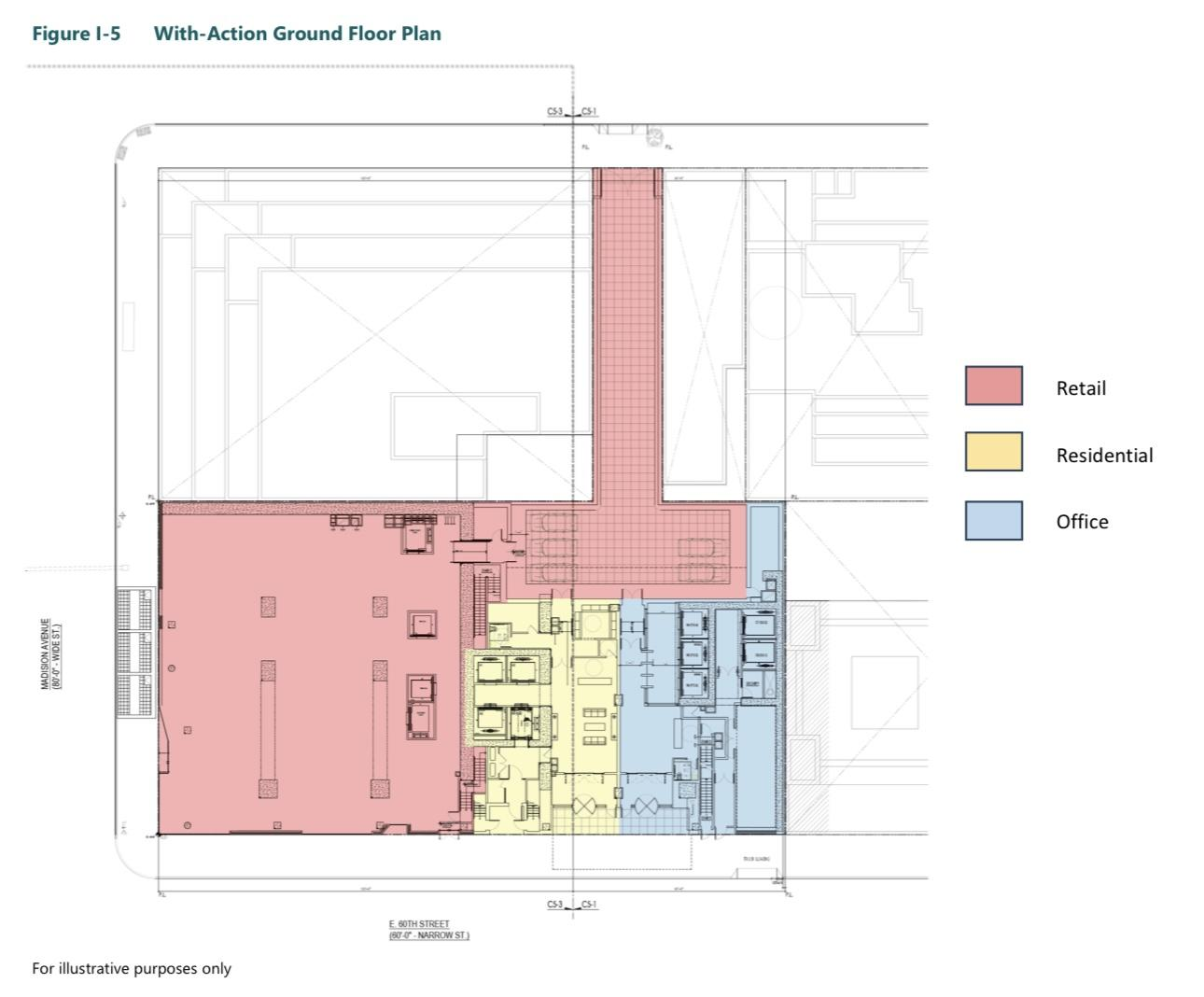
The below plan previews the configuration of the ground-floor programming, outlining the division of the retail space along with the residential and office lobbies. The retail component is shown with a narrow panhandle extension to the north for deliveries along East 61st Street.

655 Madison Avenue. Developed by Extell.
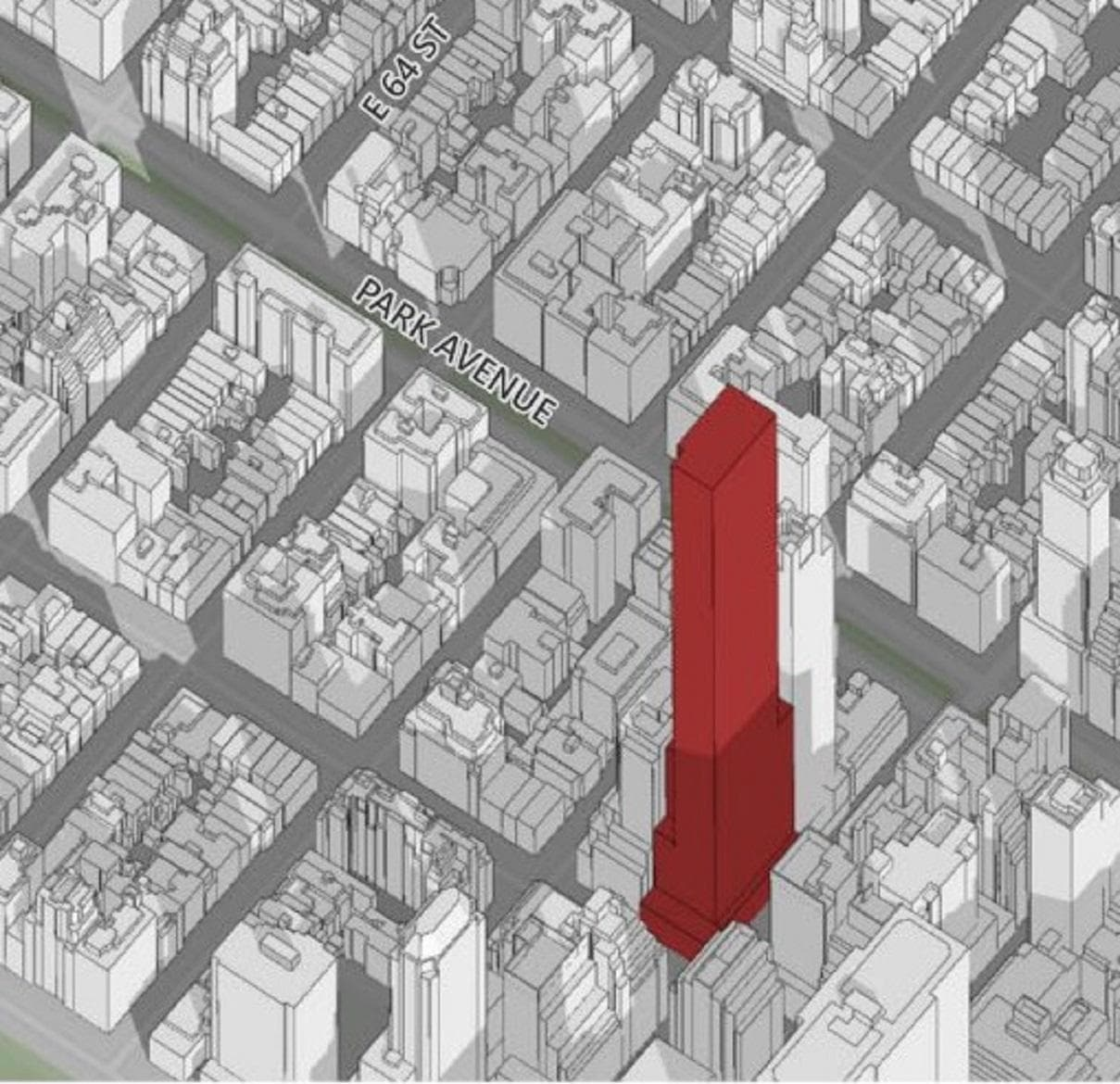
Here we see a more zoomed out diagram showing the scale of 655 Madison Avenue with more of its surroundings looking northeast.

655 Madison Avenue. Developed by Extell.

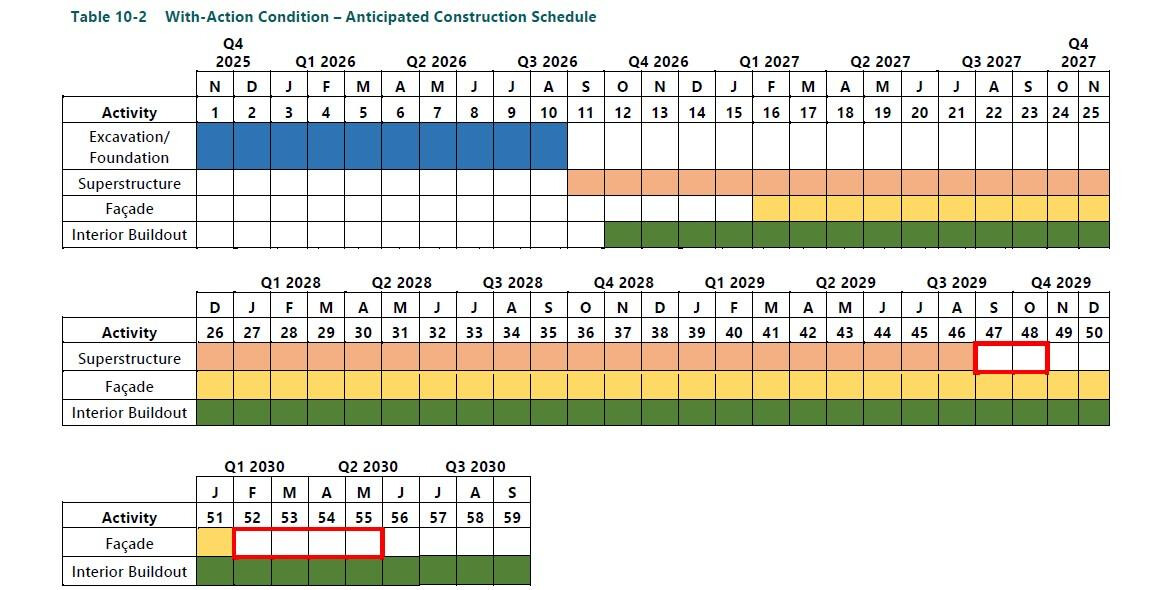
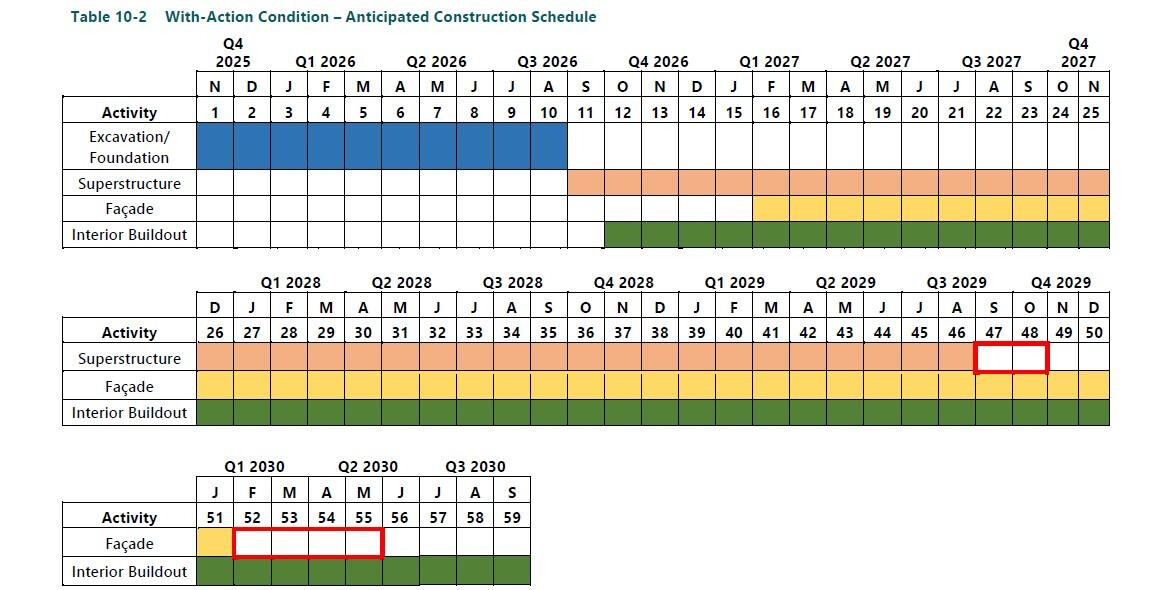
Finally, the table below shows what a timeline of construction could look like if work on the new 655 Madison Avenue were to break ground this fall. Although this has not been confirmed to be the official schedule, it provides an idea of how long each stage of construction can last once the supertall project gets underway.

655 Madison Avenue’s timeline of construction.

At the time of our last update, Fashion brand Chanel was contemplating a $450 million purchase of the nearly 65,000 square feet of upcoming retail space in the building’s podium. The deal has yet to be finalized.

Extell’s Gary Barnett purchased the property from William Equities for around $160 million in October 2024. Tyko Capital, which is backed by Elliott Investment Management, financed the acquisition.

The nearest subways from the development are the N, R, and W trains at the 5th Avenue–59th Street and Lexington Avenue-59th Street stations, as well as the F and Q trains at the Lexington Avenue-63rd Street station.

A construction timeline for the new tower at 655 Madison Avenue has yet to be announced.

What’s next for Douglas Elliman as agents depart and merger talks continue?

Douglas Elliman's Michael Liebowitz; Compass' Holly Parker, Tracy Tutor, Stephen Kotler and Sotheby’s International Realty's Ernie Carswell (Getty, Alive Coverage, Compass, Sotheby’s International Realty, Instagram/thestephenkotler, Nick Frandjian)
Douglas Elliman’s Michael Liebowitz; Compass’ Holly Parker, Tracy Tutor, Stephen Kotler and Sotheby’s International Realty’s Ernie Carswell (Getty, Alive Coverage, Compass, Sotheby’s International Realty, Instagram/thestephenkotler, Nick Frandjian)

Jun 8, 2025, 9:00 AM

By 

  • Mike Romano

https://c1daa319dbca0ab54cdbfe554d5088aa.safeframe.googlesyndication.com/safeframe/1-0-45/html/container.html

Listen to this article

08:05

1x

Douglas Elliman has spent the past year in the spotlight — and not always for the reasons it would prefer. A swirl of executive exits, agent departures and strained financials have dogged the luxury brokerage. 

But the brokerage has shifted the narrative. The firm turned around some of its money troubles in the first quarter and was reported to have fielded a potential sale.

Under new CEO Michael Liebowitz, Elliman is narrowing losses and growing revenue. First-quarter losses dropped to $6 million, down from $42 million a year ago. Revenue climbed 25 percent year-over-year to $253 million. And its stock — which dipped near $1 last summer — more than doubled in value before spiking another 40 percent on news of a potential acquisition.

Anywhere Real Estate, the residential giant that owns major brands including Corcoran, Sotheby’s and Coldwell Banker, reportedly offered $4 per share, sparking interest from other potential buyers. Analysts say Elliman’s low debt, high brand recognition and recent rebound make it a juicy target in a consolidating market.

But the potential deal wouldn’t come without its complications. Industry observers have called it an “awkward fit,” given Elliman’s elite-market identity and Anywhere’s franchise-first playbook. And Elliman doesn’t bring much in the way of title, mortgage or ancillary business, the kind of vertical integration bidders increasingly want.

Still, there’s plenty to like. The company holds $130 million in cash, just one $50 million note, and has cut $20 million in expenses — including its jet lease deal — since Liebowitz took over. The firm also launched “Elliman International” and is exploring expansion abroad after ending a 15-year partnership with Knight Frank.

What Elliman can’t seem to shake, though, is the agent departures.

The exits keep piling up. Holly Parker, one of Elliman’s most recognizable Manhattan agents, left after 24 years with the firm. “Million Dollar Listing” star Tracy Tutor left Elliman for Compass back in January. Ernie Carswell jumped to Sotheby’s International Realty’s Beverly Hills office, bringing his 15-person team with him. Palm Beach heavyweight Gary Pohrer exited for Serhant. The brokerage lost a longtime Aspen team with nearly $200 million in volume, also to Compass. And Stephen Kotler, the brokerage’s former western region CEO, ended a multi-decade tenure at Elliman. Compass alone has picked up 134 former Elliman agents since 2024, representing $3.3 billion in sales volume.

It’s part of a broader housecleaning. Elliman’s leadership ranks were shaken last fall, beginning with the retirement of longtime chairman Howard Lorber, followed by the exits of CEO Scott Durkin and COO Richard Lampen. A board concerned about workplace culture and legal fallout — especially from the sex trafficking scandal tied to the Alexander brothers — has been trying to reset the tone from the top down.


There was plenty of other news this week, and our latest magazine issue dives into some heavy-hitting real estate family dynasties. Plus, Brookfield closes in on a $400 million deal for a Manhattan office building, Bill Pulte continues his push to privatize Fannie and Freddie and Starwood sets its sights on Alan Stalcup.

‘You Just Have To Keep Going’: KKR, Goldman Sachs Execs On How Tariffs Impact CRE Deals

As President Donald Trump continued to reveal changes to his tariff policies, the stock market tumbled Thursday, giving back more than half of the gains from Wednesday’s historic rally.

The head-spinning trade policy shifts have roiled markets and brought on a deep sense of uncertainty. In the middle of Times Square, a group of real estate finance executives were attempting to keep their cool and separate the signal from the noise.

Among tariff concerns is a 25% fee on aluminum and steel.

“We’re not taking a pause. We just believe in linear pacing,” Julia Butler, a managing director for real estate at private equity giant KKR and the CEO of KKR Real Estate Select Trust, said at Bisnow’s Lending and Investment Conference. 

“We’re never going to get it perfect, but discipline is not getting scared in uncertain moments, but not getting overly exuberant either. You just have to keep going.”

In the early morning before the event, Goldman Sachs Managing Director Nitin Jagga held a meeting with his staff, highlighting trade routes that may be impacted by tariffs, he told the audience at the Marriott Marquis. But the possible outcomes of the new policies are still difficult to predict.

“Even if you start isolating, where are the tariff impacts on commercial real estate? Where is the recession impact on commercial real estate? Where is the interest rate impact in all of this? And I think that’s impacting everything,” Jagga said. “There is still uncertainty out there on how to position yourself if rates rise. What margin of error do I have?”

Alvarez & Marsal’s Steven Kurtz, KKR’s Julia Butler, Canyon Partners Real Estate’s Jacob Feingold, Lee & Associates’ Ben Tapper, IPA’s Max Herzog and Silverstein Properties’ Jonathan Hong

Last Wednesday, Trump unveiled sweeping new tariffs on more than 100 countries that were far more punitive than most expected. A stock market massacre followed, from which real estate owners weren’t spared. In the following two days, $5T of value was erased from S&P 500 companies.

For real estate developers, fears arose over both hard costs in the short term and economic pressures that may impact consumers’ wallets in the longer term.

“A lot of the institutional investment committees are evaluating portfolios across not just real estate exposure. They’re seeing what their portfolios are doing in the public [markets], and that is providing them reason to be cautious,” Canyon Partners Real Estate Head of Originations Jacob Feingold said onstage.

“Real estate is a highly illiquid asset class,” he added. “You’re making a decision today that’s going to stick with you for two, three, four years. It’s not a trade that’s easy to unwind, unlike other kinds of security asset classes.”

Some of the concerns were alleviated a week later when Trump announced a 90-day pause on reciprocal tariffs. Stocks surged in response, with the S&P 500 gaining 9.5% for its best one-day performance since 2008 and the broad market index tracking its third-biggest gain since World War II.

But the excitement was short-lived. Trump kept in place a universal 10% tariff on all countries and escalated his trade war with China, hitting the world’s second-largest economy with a 145% duty on all goods. He also announced 25% tariffs on aluminum, steel and auto parts. 

Bisnow/Ciara Long

Belkin, Burden, Goldman LLP’s Craig Price, Bravo Capital’s Aidan Birnbaum, Affinius Capital’s David Greenburg, Ariel Property Advisors’ Matt Dzbanek and Goldman Sachs’ Nitin Jagga

Tariffs on aluminum and steel are especially a concern for real estate due to the impact on construction costs. The FTSE Nareit Equity REITs index ended Thursday down more than 2% and has lost more than 12% of its value in the past six months.

Still, Silverstein Properties Vice President of Development and Acquisitions Jonathan Hong said that the true impact is far from determined. 

“There’s probably a handful of projects in New York and around the country that are buying steel up to the quantities that you need to have the material impact of costs,” Hong said. “All of this changed the last 24, 48 hours, and it’ll continue to, so we’re just trying to track how material that change will be.”

Still, when asked what those sitting at the closing table should do at this moment, the more than a dozen lenders and investors who spoke at the event agreed that borrowers should keep forging ahead.

“Our business tends to be market-driven, and during tough times, where it is right now [with] the volatility, these are difficult conversations,” Jagga said. “If something is an offer, always take it.”

Chasing the office-to-resi boom, some developers go bust

Conversions end up being money pits for developers who get in over their heads

Brandon Chasen with One Calvert Plaza in Baltimore, 2100 M Street NW in Washington DC and Post Brothers’ Matt Pestronk (Getty, Post Brothers, LinkedIn, Google Maps)

Mar 27, 2025, 8:30 AM

By 

  • Rich Bockmann

Brandon Chasen saw big opportunities in Baltimore’s hollowed-out office buildings and jumped in head first, quickly becoming one of the city’s biggest office-to-resi converters.

But now he’s facing at least 18 lawsuits, creditors are going after his Ferraris and Gulfstream jet and his biggest project — converting Baltimore’s first high-rise office — has gone bust.

“He was trying to do four or five all at one time, without ever having done one this size,” said David Bowman, the receiver appointed to oversee One Calvert Plaza, which Chasen had planned to convert into 157 apartments.

Chasen Companies defaulted on the project’s $34 million loan last year, and his lender moved to take over the Beaux-Arts building. Earlier this month, the receiver hired brokerage NAI Michael to find a buyer in a foreclosure sale. 

“This job is way over cost. And the pro forma is way above what could realistically be obtained when it’s finalized and starts to be leased up,” Bowman added.

One Calvert Plaza is just one example of the conversion projects faltering since developers rushed in to transform office buildings that had been emptied out by the pandemic. 

While it’s true that developers in cities from New York to San Francisco are successfully moving forward with conversion projects, these failed redevelopments highlight the unique difficulties that come with transforming underused office buildings into apartments. 

Developers must first buy a building at a low enough price — and then have to navigate challenges like relocating tenants that still have leases in place and dealing with unexpected costs. Rising interest rates make things even more difficult. 

In sum, a project that looks good on paper can soon get out of hand. 

In San Francisco, for example, the historic Warfield Building was set to be the city’s first conversion when developer Group I filed plans in 2022 to turn the building into 34 apartments. 

But the company defaulted on its $26 million mortgage, and in February sold the building for $7 million to the local NPR-member radio station KALW Public Media, which will use it as a hub for media, journalism and literature.

In Washington, Post Brothers was hit with a foreclosure notice earlier this month after defaulting on a $78 million loan backing the 300,000-square-foot office building at 2100 M Street NW in the city’s West End. Philadelphia-based Post Brothers bought the building for $67 million in 2023 — a nearly 30 percent discount to the $92.5 million sellers Network Realty Partners and Meadow Partners paid in 2019 — and planned to convert the building into 400 apartment units.

Post Brothers president Matt Pestronk told Commercial Observer the developer was working on “resolving this matter and pursuing development of the property.”

And in Chicago, Chase Chavin’s Intersection last year handed the keys of the 24-story office at 65 East Wacker Place to lender Acres Capital. Intersection had purchased the building for $19 million in 2022 after the previous owner defaulted on its Acres mortgage and planned to convert a portion of the 96-year-old building into 144 apartments. 

Sign Up for the National Weekly Newsletter

SIGN UP

It was one of the earlier projects in Chicago hoping to pull off a successful conversion. But it had its issues: Although the building was half empty, there were 23 tenants that Chavin had to relocate. In the meantime, interest rates rose and some $300,000 in liens piled up at the project.

Acres has picked a new partner, Mavrek Development, and the two are moving forward with the project.

Pro forma

Successfully converting an office building is just the first step. Then there’s leasing and operating it.

In New York, Nathan Berman’s Metro Loft Management recently ran into debt troubles on two buildings it had converted in previous years.

Metro Loft — the city’s most prolific converter — failed to pay off a $265 million loan at 180 Water Street and a $250 million mortgage on 20 Broad Street when they matured last year. The company finished the conversion of the 573-unit 180 Water in 2017 and the 533-unit 20 Broad Street the following year.

Both buildings are nearly fully occupied, though they continue to offer incentives to renters. One of the notorious features of a converted office building is that they sometimes create awkward apartments with inconvenient layouts and poor light and air.

Berman, however, said the troubles had nothing to do with the fact that they were conversions, but simply that they were overleveraged.

“They’re both at 99 percent occupancy and at the highest numbers they’ve ever produced. In that regard, they’re doing as well as we could’ve possibly expected them to do,” he said. “The level of leverage we put on them worked fine at lower rates. It’s not like all of a sudden these buildings simply no longer work.”

Metro Loft sold 20 Broad to its lender in January, and Berman said he’s bringing in a partner at 180 Water Street and the two will pay off the building’s mezzanine debt.

There’s still a question, though, of how so many conversion projects will impact the market.

One of the problems Chasen had in Baltimore, Bowman said, was that more units started coming online than the market could comfortably absorb. In Manhattan’s Financial District, there are at least four conversions in the pipeline with roughly 3,800 units planned, and it remains to be seen how well they will rent and at what numbers.

Christopher Albanese of the Albanese Organization said at a panel discussion over the summer that he thinks some of them will struggle to hit the rents they need to pencil out.

“People are throwing around $100 a foot,” he said. “Yes, rents are $100 a foot, but not when your apartment is looking into a brick wall and it’s a 700-square-foot studio with one small window.”

Rendering Revealed For Park Tower At 629 Newark Avenue in Jersey City, New Jersey

Rendering courtesy of C3D Architecture.
By: Michael Yound 8:00 am on February 28, 2025

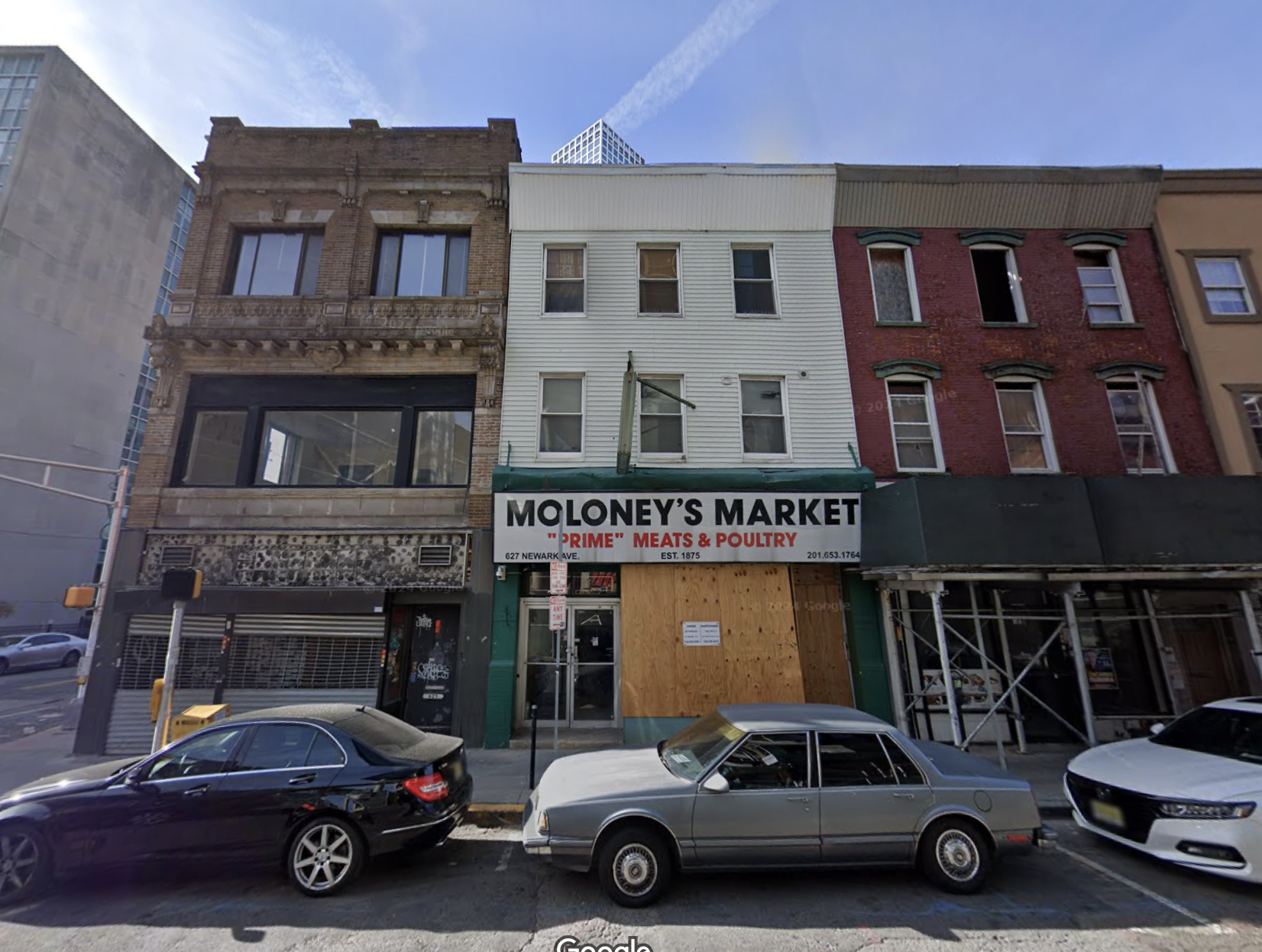
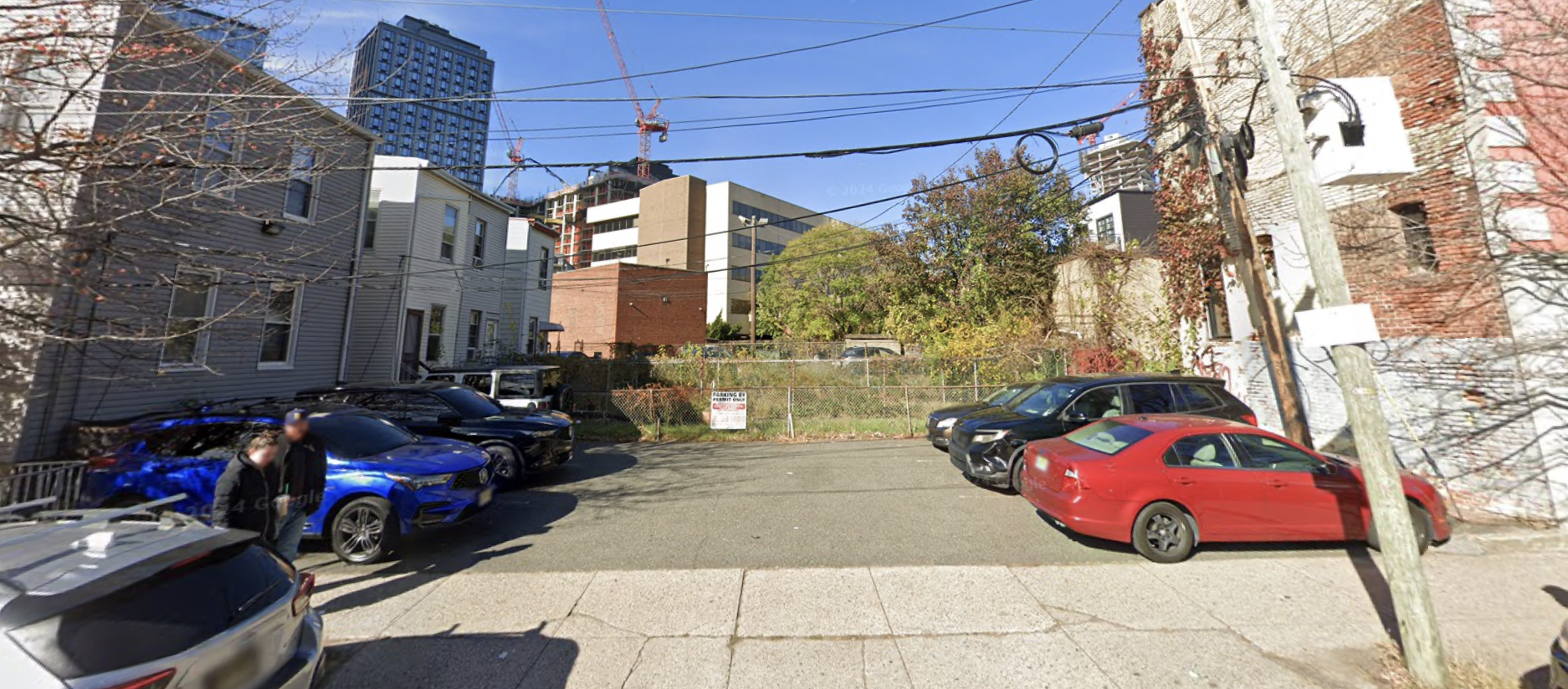
A new rendering has been revealed for Park Tower, a proposed 47-story residential building at 629 Newark Avenue in the Journal Square section of Jersey City, New Jersey. Designed by C3D Architecture and developed by Namdar Group, the structure can potentially be built as of right, yielding 1,151 rental units, 5,000 square feet of retail space, and 26,000 square feet of office space. The project site is bound by the corner of Newark and Central Avenues to the east and Lott Street to the west, and is currently home to a small surface-level parking lot flanked by several two- and three-story structures.

The main rendering above depicts a ground-level view looking up at the monolithic tower. The design consists of a base comprised of three-story rounded columns forming a motif of triangular voids, followed by a uniform glass curtain wall rising uninterrupted to the flat roof parapet of the skyscraper. The pinnacle is capped with a decorative crown incorporating sloped rounded columns, complementing the base of the superstructure, as well as chamfered triangular corners.

The following Google Street View images show the existing site conditions at 629 Newark Avenue.

The three structures along Newark Avenue. Image via Google Maps.

The parking lot along Central Avenue. Image via Google Maps.

The four structures along Lott Street. Image via Google Maps.

In recent news, Namer Group acquired a $32 million loan from Post Road Group for refinancing and pre-development work for 629 Newark Avenue and other nearby projects the developer is constructing. A portion of the deal was brokered by HKS Real Estate Advisors.

The development site is a short walk northeast of the Journal Square PATH station, providing access to Newark Penn Station to the west, and the Oculus at the World Trade Center in Lower Manhattan to the east.

A demolition time frame and completion date for 629 Newark Avenue has yet to be announced.

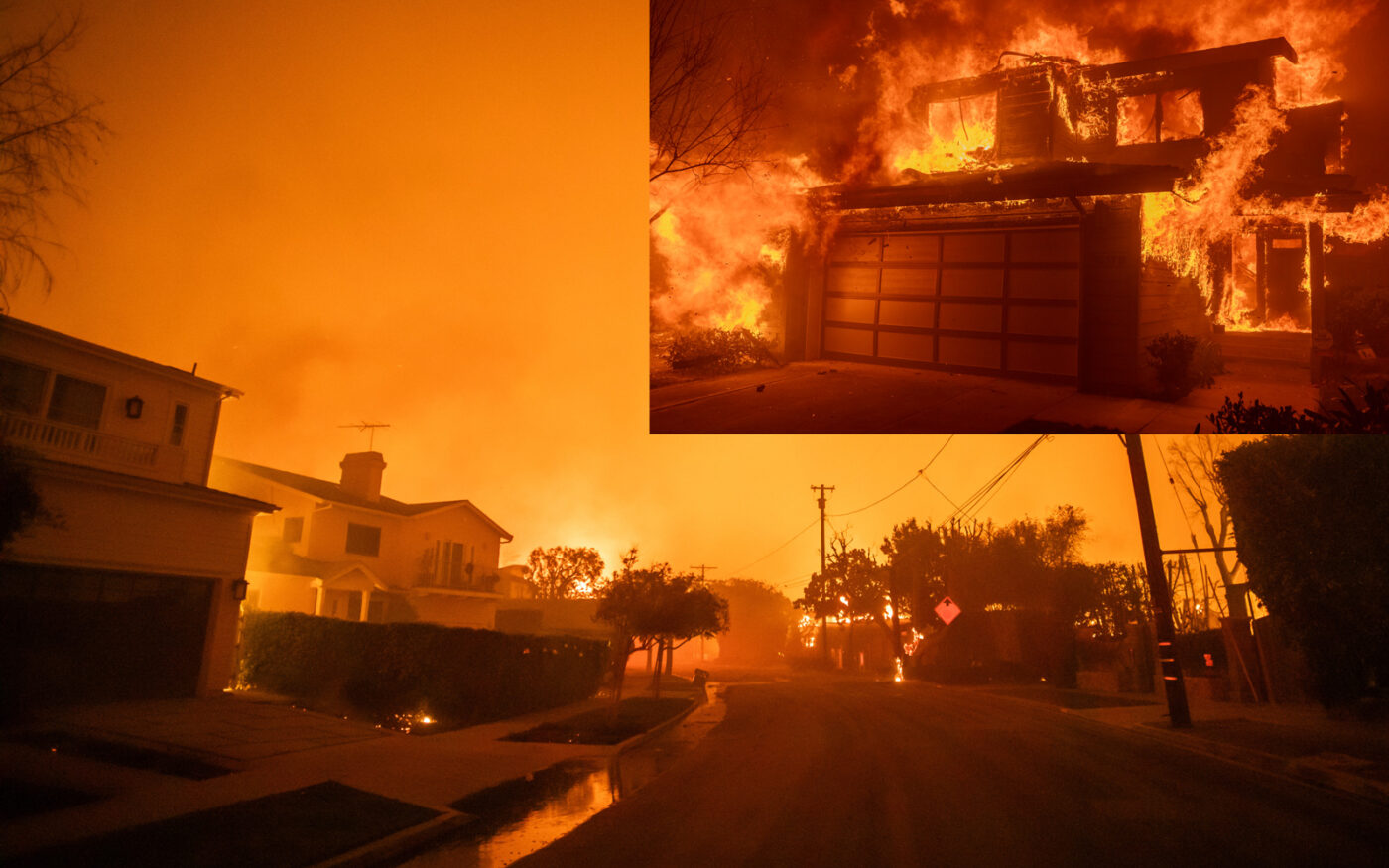
Homes, commercial buildings burn in Palisades, Malibu, Pasadena foothills

99 mph gusts of Santa Anas fuel worst wildfires in 14 years

Fires whipped by 99 mph gusts destroy Southern California homes, businesses
(Getty)

Jan 8, 2025, 10:38 AM

By 

  • TRD Staff

Savage overnight winds lashed out across Southern California, where wildfires torched multimillion-dollar homes, businesses, medical centers and cultural icons from Los Angeles beaches to the foothills of Pasadena.

Fires stoked by gusts of up to 99 miles per hour tore through Pacific Palisades and Malibu, burning some of the region’s priciest homes and businesses, while a second uncontrolled blaze fueled by Santa Ana winds raged through neighborhoods around Altadena, with a third conflagration threatening Sylmar, the Los Angeles Times reported.

Tens of thousands of residents were forced to evacuate. Some residents were forced to leave their cars on the side of the road while trying to flee. One firefighter sustained a serious head injury while battling the blaze, authorities said. Previous

Fires whipped by 99 mph gusts destroy Southern California homes, businesses
LOS ANGELES, CA – JANUARY 07: A wind-driven fire burns on January 7, 2025 in Los Angeles, California. Santa Ana wind is fueling wildfires in Los Angeles that have destroyed homes and forced the evacuation of thousands of people. (Photo by Qian Weizhong/VCG via Getty Images)
Pacific Palisades, CA – January 07: A Super Scooper drops ocean water on a hillside as the Palisades fire rages on Tuesday, Jan. 7, 2025 in Pacific Palisades, CA. (Brian van der Brug / Los Angeles Times via Getty Images)
LOS ANGELES, CALIFORNIA – JANUARY 8: Flames from the Palisades Fire burn homes at Temescal Canyon road during a powerful windstorm on January 8, 2025 in the Pacific Palisades neighborhood of Los Angeles, California. The fast-moving wildfire is threatening homes in the coastal neighborhood amid intense Santa Ana Winds and dry conditions in Southern California. (Photo by Apu Gomes/Getty Images)
Fires whipped by 99 mph gusts destroy Southern California homes, businesses
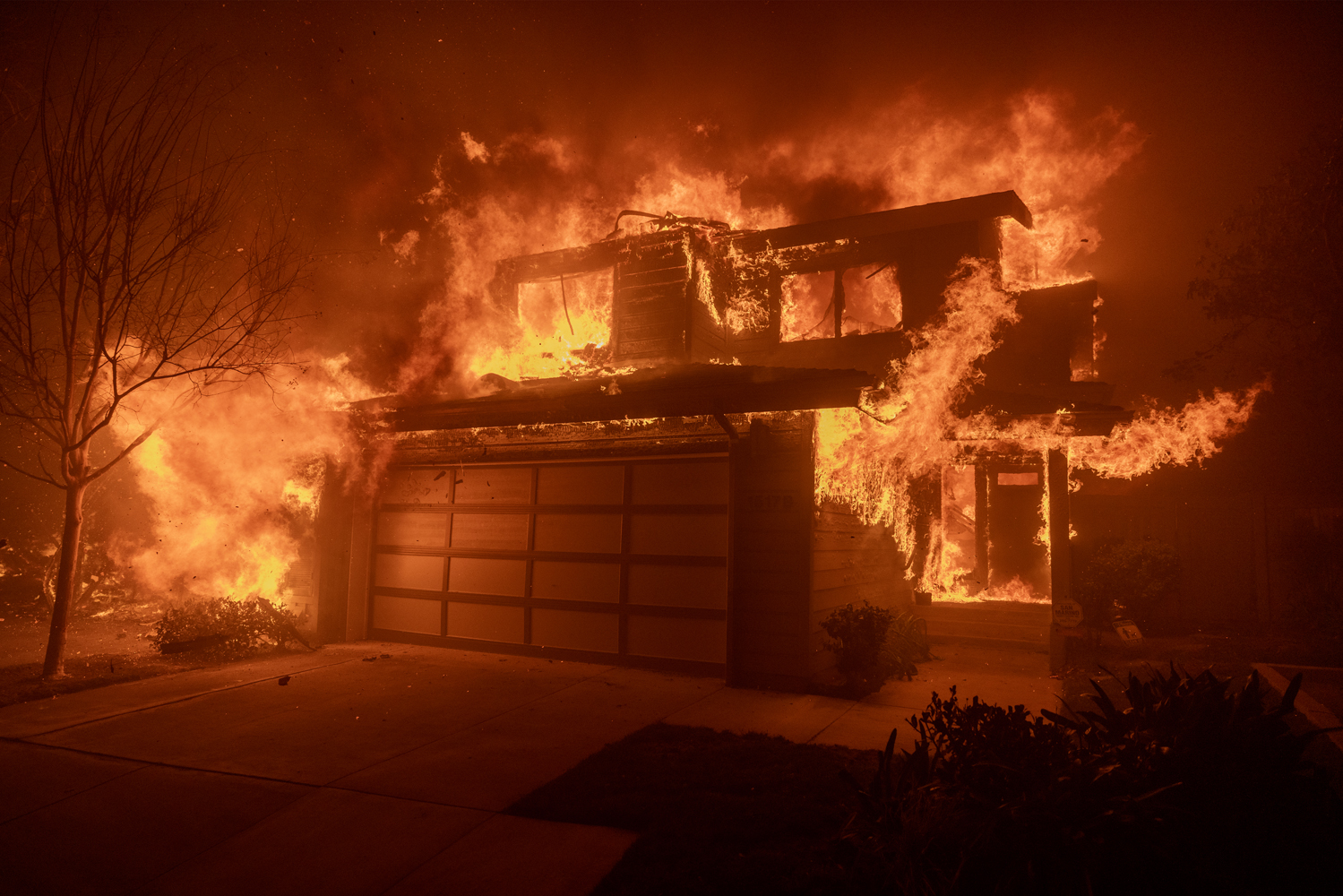
ALTADENA, CALIFORNIA – JANUARY 08: Fire engulfs a home as the Eaton Fire moves through the area on January 08, 2025 in Altadena, California. Fueled by intense Santa Ana Winds, the Palisades Fire has grown to over 2,900 acres and 30,000 people have been ordered to evacuate while a second fire has emerged near Eaton Canyon in Altadena. (Photo by Justin Sullivan/Getty Images)
Fires whipped by 99 mph gusts destroy Southern California homes, businesses
PASADENA, CALIFORNIA – JANUARY 7: Homes burn as powerful winds drive the Eaton Fire on January 7, 2025 in Pasadena, California. A powerful Santa Ana wind event has dramatically raised the danger of wind-driven wildfires such as the dangerous and destructive Palisades Fire near Santa Monica. The strong winds also forced President Joe Biden to cancel his plan to travel between Los Angeles and Riverside, California. (Photo by David McNew/Getty Images)
Fires whipped by 99 mph gusts destroy Southern California homes, businesses
PASADENA, CALIFORNIA – JANUARY 7: Firefighters battle the Eaton Fire in strong winds as many homes burn on January 7, 2025 in Pasadena, California. A powerful Santa Ana wind event has dramatically raised the danger of wind-driven wildfires such as the dangerous and destructive Palisades Fire near Santa Monica. The strong winds also forced President Joe Biden to cancel his plan to travel between Los Angeles and Riverside, California. (Photo by David McNew/Getty Images)
Fires whipped by 99 mph gusts destroy Southern California homes, businesses
LOS ANGELES, CALIFORNIA – JANUARY 7: Flames from the Palisades Fire burn a home on January 7, 2025 in the Pacific Palisades neighborhood of Los Angeles, California. (Photo by Eric Thayer/Getty Images)
Fires whipped by 99 mph gusts destroy Southern California homes, businesses
LOS ANGELES, CALIFORNIA – JANUARY 8: A Firefighter walks by a home on flames from the Palisades Fire during a powerful windstorm on January 8, 2025 in the Pacific Palisades neighborhood of Los Angeles, California. The fast-moving wildfire is threatening homes in the coastal neighborhood amid intense Santa Ana Winds and dry conditions in Southern California. (Photo by Apu Gomes/Getty Images)
Fires whipped by 99 mph gusts destroy Southern California homes, businesses
A firefighter douses flames during the Eaton fire in Pasadena, California on January 08, 2025. Multiple fast-moving wildfires broke out in Los Angeles county burning buildings and causing thousands to evacuate as “life threatening” winds whipped the region. Frightened residents abandoned their cars on one of the only roads in and out of the upscale Pacific Palisades area, fleeing on foot from the 770-acre (310-hectare) blaze engulfing an area crammed with multi-million dollar homes in the Santa Monica Mountains. (Photo by JOSH EDELSON / AFP) (Photo by JOSH EDELSON/AFP via Getty Images)
LOS ANGELES, CALIFORNIA – JANUARY 7: Flames from the Palisades Fire burn homes on January 7, 2025 in the Pacific Palisades neighborhood of Los Angeles, California. Fueled by intense Santa Ana Winds, the Palisades Fire has grown to over 2,900 acres and 30,000 people have been ordered to evacuate while a second fire has emerged near Eaton Canyon. (Photo by Eric Thayer/Getty Images)
Fires whipped by 99 mph gusts destroy Southern California homes, businesses
LOS ANGELES, CA – JANUARY 07: A wind-driven fire burns on January 7, 2025 in Los Angeles, California. Santa Ana wind is fueling wildfires in Los Angeles that have destroyed homes and forced the evacuation of thousands of people. (Photo by Qian Weizhong/VCG via Getty Images)
Pacific Palisades, CA – January 07: A Super Scooper drops ocean water on a hillside as the Palisades fire rages on Tuesday, Jan. 7, 2025 in Pacific Palisades, CA. (Brian van der Brug / Los Angeles Times via Getty Images)
LOS ANGELES, CALIFORNIA – JANUARY 8: Flames from the Palisades Fire burn homes at Temescal Canyon road during a powerful windstorm on January 8, 2025 in the Pacific Palisades neighborhood of Los Angeles, California. The fast-moving wildfire is threatening homes in the coastal neighborhood amid intense Santa Ana Winds and dry conditions in Southern California. (Photo by Apu Gomes/Getty Images)
Fires whipped by 99 mph gusts destroy Southern California homes, businesses
ALTADENA, CALIFORNIA – JANUARY 08: Fire engulfs a home as the Eaton Fire moves through the area on January 08, 2025 in Altadena, California. Fueled by intense Santa Ana Winds, the Palisades Fire has grown to over 2,900 acres and 30,000 people have been ordered to evacuate while a second fire has emerged near Eaton Canyon in Altadena. (Photo by Justin Sullivan/Getty Images)
Fires whipped by 99 mph gusts destroy Southern California homes, businesses
PASADENA, CALIFORNIA – JANUARY 7: Homes burn as powerful winds drive the Eaton Fire on January 7, 2025 in Pasadena, California. A powerful Santa Ana wind event has dramatically raised the danger of wind-driven wildfires such as the dangerous and destructive Palisades Fire near Santa Monica. The strong winds also forced President Joe Biden to cancel his plan to travel between Los Angeles and Riverside, California. (Photo by David McNew/Getty Images)
Fires whipped by 99 mph gusts destroy Southern California homes, businesses
PASADENA, CALIFORNIA – JANUARY 7: Firefighters battle the Eaton Fire in strong winds as many homes burn on January 7, 2025 in Pasadena, California. A powerful Santa Ana wind event has dramatically raised the danger of wind-driven wildfires such as the dangerous and destructive Palisades Fire near Santa Monica. The strong winds also forced President Joe Biden to cancel his plan to travel between Los Angeles and Riverside, California. (Photo by David McNew/Getty Images)
Fires whipped by 99 mph gusts destroy Southern California homes, businesses
LOS ANGELES, CALIFORNIA – JANUARY 7: Flames from the Palisades Fire burn a home on January 7, 2025 in the Pacific Palisades neighborhood of Los Angeles, California. (Photo by Eric Thayer/Getty Images)
Fires whipped by 99 mph gusts destroy Southern California homes, businesses
LOS ANGELES, CALIFORNIA – JANUARY 8: A Firefighter walks by a home on flames from the Palisades Fire during a powerful windstorm on January 8, 2025 in the Pacific Palisades neighborhood of Los Angeles, California. The fast-moving wildfire is threatening homes in the coastal neighborhood amid intense Santa Ana Winds and dry conditions in Southern California. (Photo by Apu Gomes/Getty Images)
Fires whipped by 99 mph gusts destroy Southern California homes, businesses
A firefighter douses flames during the Eaton fire in Pasadena, California on January 08, 2025. Multiple fast-moving wildfires broke out in Los Angeles county burning buildings and causing thousands to evacuate as “life threatening” winds whipped the region. Frightened residents abandoned their cars on one of the only roads in and out of the upscale Pacific Palisades area, fleeing on foot from the 770-acre (310-hectare) blaze engulfing an area crammed with multi-million dollar homes in the Santa Monica Mountains. (Photo by JOSH EDELSON / AFP) (Photo by JOSH EDELSON/AFP via Getty Images)
LOS ANGELES, CALIFORNIA – JANUARY 7: Flames from the Palisades Fire burn homes on January 7, 2025 in the Pacific Palisades neighborhood of Los Angeles, California. Fueled by intense Santa Ana Winds, the Palisades Fire has grown to over 2,900 acres and 30,000 people have been ordered to evacuate while a second fire has emerged near Eaton Canyon. (Photo by Eric Thayer/Getty Images)
Fires whipped by 99 mph gusts destroy Southern California homes, businesses
LOS ANGELES, CA – JANUARY 07: A wind-driven fire burns on January 7, 2025 in Los Angeles, California. Santa Ana wind is fueling wildfires in Los Angeles that have destroyed homes and forced the evacuation of thousands of people. (Photo by Qian Weizhong/VCG via Getty Images)

 Next

The unusually fierce “wind wave” broke out Tuesday morning along Piedra Morada Drive in Pacific Palisades and by nightfall had grown to more than 2,900 acres. The winds were expected to roar through Thursday.

L.A. developer Rick Caruso said several homes around his Palisades Village shopping center were “fully engulfed,” while his seven-year-old retail center was damaged. His daughter’s home was destroyed, he said, while his family awaited word if one of his sons had lost his home.

The Pacific Palisades fire engulfed more homes along Pacific Coast Highway, with firefighters trying in vain to prevent the flames from destroying beachfront homes. Businesses were no less vulnerable.

Rosenthal Wine Bar & Patio was torched, as was nearby Wylie’s Bait & Tackle, the Malibu Feed Bin and the Reel Inn. The art inside the Getty Villa museum, whose grounds caught fire, was threatened. Palisades Charter High School, a local landmark, was destroyed.

The fires consumed homes along Surfwood Road in Sunset Mesa, as well as Shoreheights Drive. 

Sign Up for the National Weekly Newsletter

SIGN UP

Meanwhile, the Eaton fire around Altadena and Pasadena burned uncontrolled as winds of up to 99 mph whipped out of the San Gabriel Mountains. An unknown number of homes were destroyed overnight by a fire near Eaton Canyon that by evening had consumed 1,000 acres.

Embers born by the winds tore into at least two medical facilities and destroyed a Jewish synagogue.

The Two Palms Care Center on Washington Boulevard, a long term care facility in southeastern Altadena, was burning Wednesday morning, its fire alarm still ringing.

The AltaMed Medical Center in Altadena, on Washington Boulevard, was ablaze, KABC-TV Channel 7 and KNBC-TV Channel 4 reported, as was the Pasadena Jewish Temple & Center in Pasadena and the Terraces at Park Marina assisting living center.

Evacuation warnings were issued for residents from eastern Glendale, La Cañada Flintridge and Altadena to Pasadena, Sierra Madre and Arcadia.

A third wildfire known as the Hurst Fire, has burned at least 500 acres in Sylmar, near where Interstate 5 meets the 14 and 210 freeways.

Lakewood investor Aron Puretz going to prison

Editors note: although reluctant to post negative news such as the following story, it is important for all to take heed. Unscrupulous scammer’s can upset the gravity and integrity of our profession. We post this with cautionary guidance to all our readers. Know your customer!

Gets 60 months, owes $22M in restitution for mortgage fraud scheme

Aron Puretz Sentenced to Five Years in Prison for Fraud

Dec 17, 2024, 9:30 AM

By 

Save article

SHARE THIS ARTICLE

FONT SIZEAAA

A federal judge in New Jersey sentenced real estate investor Aron Puretz to 60 months in prison for his role in a wide-ranging commercial mortgage fraud scheme.

Puretz pleaded guilty this summer to one count of wire fraud after prosecutors alleged he engaged in a multi-year conspiracy to fraudulently obtain $54.7 million in loans from Freddie Mac and lenders.

U.S. District Judge Robert Kirsh sentenced Puretz to the maximum of five years in prison and ordered him to pay restitution of $22 million. He was detained immediately at the end of the Dec. 12. hearing.

Puretz’s lawyer, Steven Yurowitz, did not return a request for comment.

In one case, according to the Department of Justice, Puretz and co-conspirators, including disgraced investor Boruch Drillman, acquired an office complex in Troy, Michigan, for $43 million, but presented the lender with a fraudulent sales contract for $70 million. The inflated sales price induced the lender to make a larger loan than it otherwise would have made.

Puretz, who ran Apex Equity Group, was also involved in a similar scheme with a multifamily property in Eureka, Illinois.

Sign Up for the undefined Newsletter

SIGN UP

And in a separate deal, Puretz and his co-conspirators acquired a rental property in Little Rock, Arkansas, using the identity of an associate. Prosecutors said Puretz hid his ownership from the Department of Housing and Urban Development and other federal and state agencies.

Puretz’s sentencing will likely set a precedent for other investors who have pleaded guilty in the sprawling mortgage fraud investigation by the Department of Justice and Federal Housing Finance Agency.

His son, Eli Puretz, pleaded guilty to one count of wire fraud for his role in the Michigan deal. Drillman pleaded guilty to one count of wire fraud and is also awaiting sentencing.

An investigation by the Philadelphia Inquirer documented numerous code violations and deplorable living conditions at properties owned by the Puretz family. Brith Sholom, a senior housing complex in the Wynnefield section of Philadelphia, racked up 275 code violations and siphoned $1 million from residents’ utility payments. Squatters are terrorizing the senior residents, the Inquirer reported.

The Puretz companies acquired more than 16,000 units of low-income housing nationwide and took out mortgages against the properties totaling more than half a billion dollars, according to the report.

Property stocks drop after Trump victory

Concerns about tariffs, immigration crackdown roil sector

Property Stocks Drop After Donald Trump’s Win
President-elect Donald Trump (Getty)

Nov 25, 2024, 11:35 AM

By 

  • Staff

Developers and landlords were jubilant when Donald Trump won his return to the White House. But property stocks didn’t react the same way.

Stocks in the sector fell 2.6 percent the day after the election, Bloomberg reported. Property stocks were the worst performing sector in the S&P 500 that day. Notable falls included a 3.8 percent drop for D.R. Horton shares and a 4 percent decline for CBRE Group.

Even though the stock market as a whole initially surged after Trump’s victory, the malaise in real estate stocks has lingered, as an index of homebuilders’ shares remains down 3 percent since Election Day. The S&P 500 index tracking real estate stocks closed above the Election Day price on Friday for only the second time since November 5.

Real estate investors are concerned about the potential effects of Trump’s promised tariffs on home sales and the office market, and about a crackdown on illegal immigration impacting the construction industry’s already-struggling workforce.

“If he manages to get through the policies that he’s proposing, that will be really bad news,” American Enterprise Institute economist Desmond Lachman said.

Sign Up for the National Weekly Newsletter

But the industry itself doesn’t necessarily feel the same level of concern as its investors. Homebuilder sentiment is on the rise as the sales outlook soars along with hopes of deregulation.

Developers are also hoping the Trump administration will institute tax cuts that will benefit the industry.

Even though Trump is two months from taking office, his election is already putting pressure on real estate’s most critical financial metrics. Economists, for instance, are raising near-term forecasts on mortgage rates as Trump’s tariff proposals may increase inflation as costs are passed on to consumers.

Proposed tax cuts could also lower fiscal revenue and raise the national debt, according to economists, which would lead to higher long-term interest rates.

—Holden Walter-Warner

NY Dems may punish real estate in response to Trump

First move will be passing rental-broker bill Nov. 13

After Trump’s Election, NYC Democrats Target Real Estate
Donald Trump (Illustration The Real Deal with Getty)

Nov 8, 2024, 7:00 AM

By 

  • Kathryn Brenzel

Save article

SHARE THIS ARTICLE

FONT SIZEAAA

Eight years ago, Donald Trump’s election enraged and energized New York’s progressives, who took control of the state Senate and slashed rent growth in rent-stabilized housing.

Now, history could repeat itself, in a slightly different form.

A week after Trump’s election to a second term, the City Council is expected to vote on a bill that aims to save tenants thousands of dollars on broker fees when they lease apartments.

Shortly before Election Day, Council members were given copies of the measure to review, indicating approval is imminent. The bill was likely to be approved next week regardless of who won the White House, but progressives can point to its passage as proof to their constituents that they are responding to Trump’s victory.

“The FARE Act is a powerful example of how Progressives are taking on the real economic struggles everyday people face, like being price gouged on rent and broker fees,” Council member Sandy Nurse, co-chair of the Council’s Progressive Caucus, said in a statement.

“While moderate and right-wing politicians play their game of divide and distract, blaming immigrants, trans people, and progressives for the struggles of the working class, this bill does the real work.”

“It’s time the moderate wing of the Democratic Party stop playing it safe and lean into populist platforms like the FARE Act that brings people together by meeting their real, urgent needs,” she continued.

In New York City, Trump lost to Vice President Kamala Harris by 37 percentage points, according to unofficial election results. He had lost to Biden by 54 points four years ago and by 63 points to Hillary Clinton in 2016. Trump gained ground in Chinese and Orthodox Jewish communities in Brooklyn, Hispanic communities in the Bronx and Queens, and Chinese and South Asian neighborhoods in Queens, the New York Times reported.

“He didn’t do that badly in New York,” said political consultant George Artz. “The margins were not great.”

Democrats saw their edge slip, albeit slightly, in other races too. The party kept its majorities in the state legislature, but lost its supermajority — a veto-proof majority — in the Senate, according to City & State.

Democratic incumbents largely held onto seats in competitive races, and Democrats flipped three House seats, but in Brooklyn, Republican Steven Chan defeated Democratic state Sen. Iwen Chu.

Having the potential in both the Senate and Assembly to override a governor’s veto gave Democrats more leverage to push progressive policies, even without ever overriding a veto by Gov. Kathy Hochul.

The 2019 rent reform, which restricted the ways that landlords can increase rents on stabilized apartments, was progressives’ most significant real estate victory in ages. After years of trying to pass good cause eviction, they succeeded this year, but changes to the legislation prompted the city chapter of the Democratic Socialists of America to say the industry “effectively defeated it by watering it down.”